Soft Costs and Delay Coverage in Connecticut Builder's Risk Policies: Loan Interest, Permits, Professional Fees, Lost Rent, and Project Delays
See How We're Different
or call us: (888) 585-5188
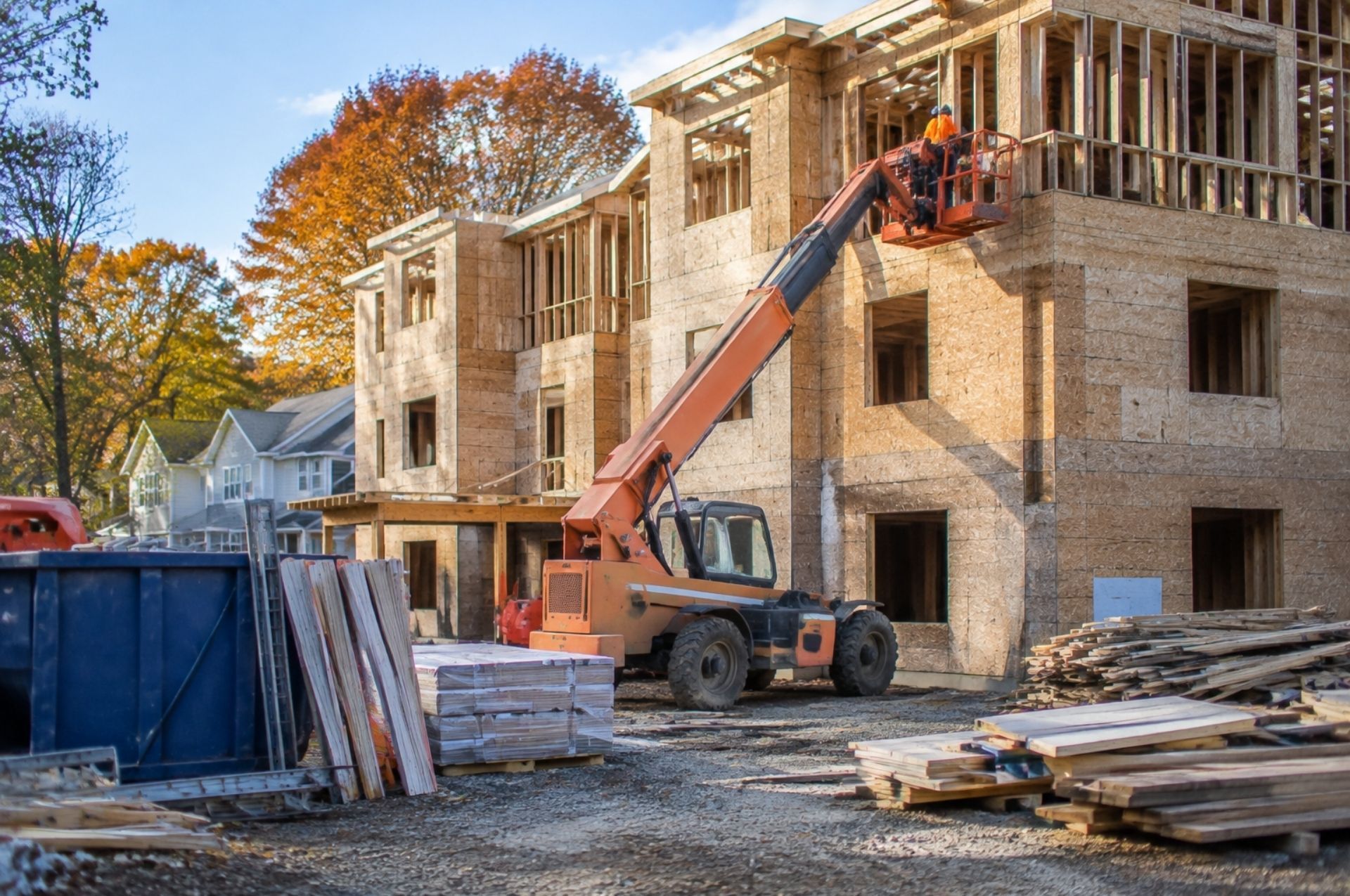
A fire in a half-framed apartment building in New Haven destroys lumber, sheathing, and installed windows, and the builder's risk carrier pays to replace them within weeks. The harder losses arrive later: months of construction loan interest, repeated architectural work, renewed permit fees, and rental income that will not begin on schedule. These indirect expenses can rival the cost of the physical damage itself, yet many Connecticut developers learn only after a claim that their policy never covered them.
Soft costs and delay coverage in Connecticut builder's risk policies exist to close that gap, safeguarding loan interest, permits, professional fees, lost rent, and the financial impact of project delays. Understanding how these protections work, where they stop, and how they are triggered is essential for any owner, lender, or general contractor financing a project in the state. The sections below explain each component in practical terms, drawing on common claim patterns and current Connecticut market conditions in 2026.
Understanding Soft Costs in Connecticut Construction Projects
Soft costs are the non-physical expenses required to complete a construction project, as opposed to the bricks, steel, and labor that form the building itself. They include financing charges, design fees, legal and accounting work, insurance premiums, permit costs, and marketing expenses. Standard builder's risk policies typically cover hard costs for physical materials, while protection for soft costs and project delays must be added through specific endorsements.
This distinction matters because a covered physical loss rarely costs only what it takes to rebuild. When a project stalls, the soft cost "burn rate" continues, and professional fees and interest can accumulate rapidly during an interruption. A developer who insures only the structure may receive a full payment for damaged materials while absorbing the indirect expenses personally.
Covering Loan Interest and Financial Carrying Costs
Construction lenders charge interest from the first draw, and that interest does not pause because a storm or fire has halted work. A soft costs endorsement can reimburse the additional interest that accrues during the extended construction period caused by a covered loss. Carrying costs such as real estate taxes, loan fees, and extension charges imposed by the lender may also be included, depending on policy wording.
One common client mistake involves underestimating the interest limit. Owners often calculate it from the original loan schedule rather than modeling a six or nine month delay at the full drawn balance, which leaves the endorsement exhausted before the project resumes.
Permits, Professional Fees, and Re-design Expenses
After a significant loss, some permits must be reissued or amended, and those fees vary widely by town. Stamford charges $13 to $25 per $1,000 of construction value, while Wilton uses a rate of $10 per $1,000 under its fee schedule effective April 1, 2026, plus a mandatory State Education Fund fee of $0.26 per $1,000.
Professional fees can be far larger. Architect fees in Connecticut generally range from 8% to 15% of total construction costs in 2026, with senior hourly rates between $225 and $300. If drawings must be revised to reflect current code or rebuilt conditions, those hours add up quickly, and the endorsement should name
architects, engineers, and legal counsel explicitly.
Managing Delay in Completion and Lost Rental Income
Delay in completion coverage, sometimes called delay in opening or delayed startup coverage, responds when a covered physical loss pushes back the date a building becomes operational. For income-producing properties such as multifamily housing, retail centers, and medical offices, the largest exposure is usually the rent that would have been collected during the extended period. Without this protection, a developer may face mortgage payments on a completed building that is generating no revenue.
The coverage typically pays projected rental income, minus expenses that do not continue, from the originally scheduled completion date until the actual completion date. Insurers often ask for pro forma statements, signed leases, or letters of intent to substantiate the projected figures. Projects with strong pre-leasing documentation usually settle these claims faster and with fewer disputes.
How Delay Coverage Protects Your Bottom Line
Every delay claim turns on a few policy terms that deserve close review before binding:
- Waiting period: Most policies apply a time deductible, often expressed in days, before benefits begin.
- Period of indemnity: This caps how long payments continue, so a 12 month limit may fall short on a complex rebuild.
- Causation trigger: The delay must result from a covered physical loss, not from labor disputes, supply shortages, or financing problems.
- Projected completion date: The schedule stated on the application becomes the benchmark, so inaccurate dates can reduce recovery.
The causation point causes frequent confusion. A subcontractor walking off the job, for instance, is not a physical loss and will not trigger delay coverage.
Comparing Hard Costs vs. Soft Costs Coverage
Owners and lenders often assume that a builder's risk limit equal to the contract value protects the entire investment. In practice, that limit usually applies only to the physical structure, and indirect expenses require separate sublimits that must be scheduled and priced individually.
| Feature | Hard Costs Coverage | Soft Costs and Delay Coverage |
|---|---|---|
| What it pays for | Materials, labor, installed work | Interest, fees, permits, lost rent |
| Included by default | Yes, in standard forms | No, added by endorsement |
| How limits are set | Completed project value | Separate sublimits per category |
| Deductible type | Dollar amount | Often a waiting period in days |
| Main beneficiary | Contractor and owner | Owner, developer, and lender |
| Proof required | Repair invoices, receipts | Loan statements, leases, pro formas |
The practical value difference is clear: hard costs coverage rebuilds the structure, while soft costs coverage keeps the financing and business plan intact. On a project with a long lease-up period or high leverage, the second category often represents the greater financial risk. This is also why lenders increasingly require soft cost and delay endorsements as a condition of construction financing.
Common Questions About Connecticut Builder's Risk Policies
Does a standard builder's risk policy cover lost rent? Usually not. Lost rental income is covered only when a delay in completion endorsement is added and a covered physical loss causes the delay.
Can soft costs coverage be added after construction starts? Some carriers allow it, but many require it at inception. Adding it midway often triggers inspections and stricter underwriting.
Is it harder to find this coverage in Connecticut now? Access has improved. As of October 1, 2026, Connecticut repealed the diligent effort requirement for surplus lines placements, so brokers no longer need three declinations from admitted insurers before seeking specialty markets.
What can be done if the renewal or extension premium rises sharply? Under Bulletin PC-94-26, Connecticut insurers must provide a reasonable explanation for premium increases within 20 business days of a request.
Do new contractor liability laws affect builder's risk?
Not directly, but they affect overall project risk. Starting January 1, 2027, general contractors become
jointly and severally liable for unpaid subcontractor wages on contracts signed on or after that date.
Making the Right Choice for Your Development
Protecting a Connecticut project means looking beyond the replacement value of materials and accounting for every expense that continues when work stops. The strongest builder's risk programs pair hard cost limits with carefully modeled sublimits for interest, permits, professional fees, and lost rent, along with a realistic period of indemnity.
Before binding, owners should stress-test their figures against a prolonged delay, confirm which professionals are named, verify the waiting period, and check that the projected completion date matches the actual schedule. Reviewing these soft cost and delay provisions alongside lender requirements helps prevent the most common and costly coverage gaps. A builder's risk policy is only as valuable as its weakest sublimit, and the time to find that weakness is before the first shovel enters the ground.
Recent posts