Connecticut Foundation Repair Contractor Insurance

or call us: (888) 585-5188
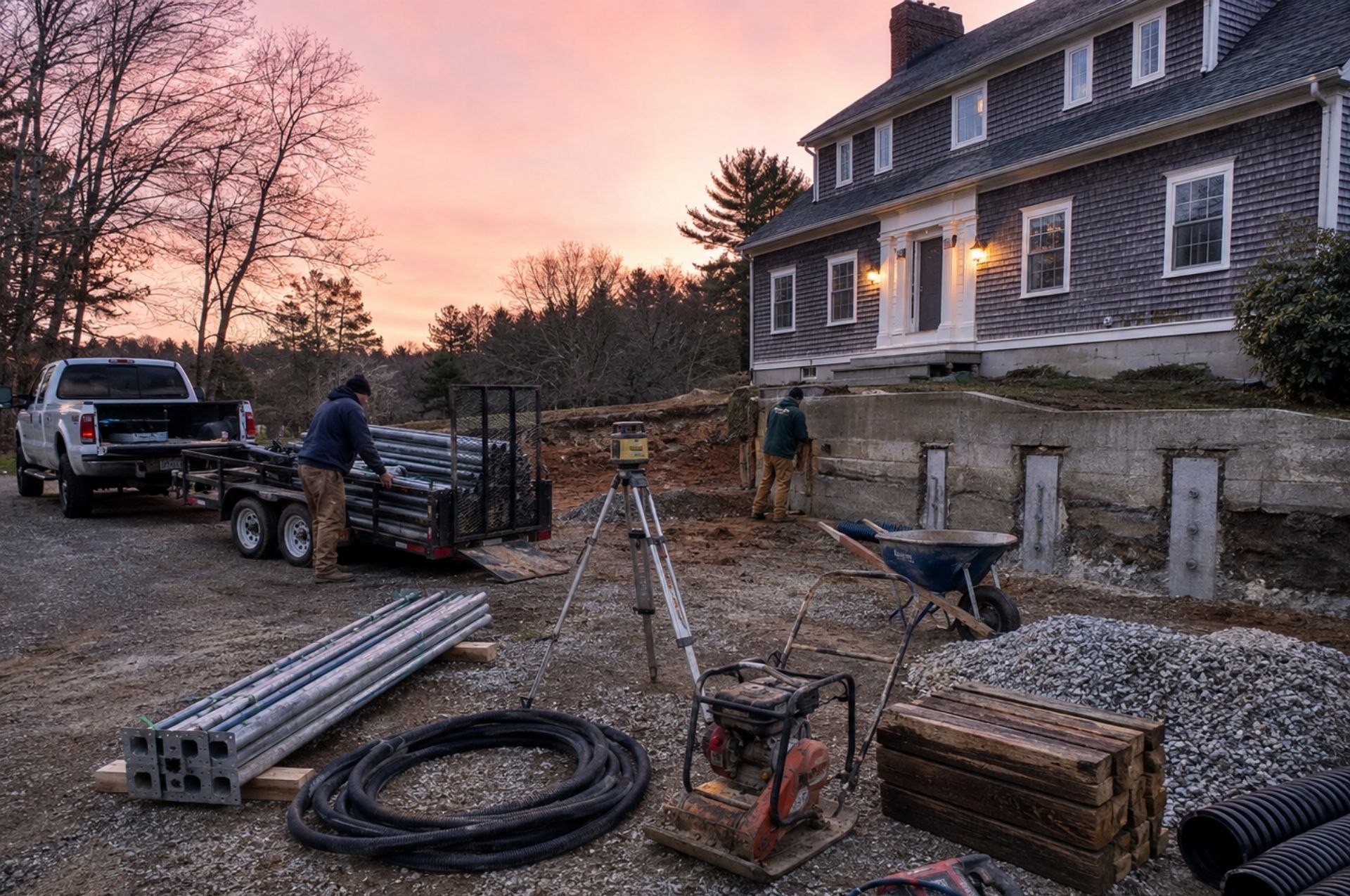
Foundation repair contractors working in Connecticut face a unique set of risks that most general construction policies simply do not address. From crumbling concrete caused by the mineral pyrrhotite, a problem that has
affected thousands of homes across the state, to the liability exposure inherent in structural assessments, the insurance needs of this trade are specialized and often misunderstood. Small foundation contractors in Connecticut pay an average of $464 per month for
general liability insurance, totaling approximately $5,567 annually, a figure that can shift considerably depending on crew size, revenue, and the types of repairs performed. Choosing the right insurance package is not just a regulatory checkbox; it is a financial safeguard that determines whether a single claim strengthens or sinks a business. Connecticut's regulatory environment adds another layer of complexity, with specific registration requirements, bonding obligations, and workers' compensation mandates that differ from neighboring states. This guide breaks down the essential coverage types, state-specific requirements, and risk management strategies that foundation repair professionals in Connecticut need to understand before purchasing or renewing a policy.
Essential Insurance for Connecticut Foundation Contractors
Foundation repair is a high-liability trade. Every project involves structural elements that, if improperly handled, can lead to property damage claims worth tens or hundreds of thousands of dollars. The insurance framework for this work needs to reflect the gravity of what is at stake: the structural integrity of someone's home or commercial building. A standard contractor policy is rarely sufficient. Foundation specialists need a layered approach that accounts for bodily injury on job sites, errors in structural evaluation, and the regulatory demands specific to Connecticut.
General Liability and Property Damage
General liability insurance is the baseline policy that every foundation repair contractor must carry. It covers third-party bodily injury, property damage, and personal injury claims that arise from business operations. If a hydraulic jack slips during a pier installation and damages a client's adjacent retaining wall, general liability responds to that claim. If a visitor trips over equipment on a job site and breaks an ankle, the policy covers medical costs and potential legal fees.
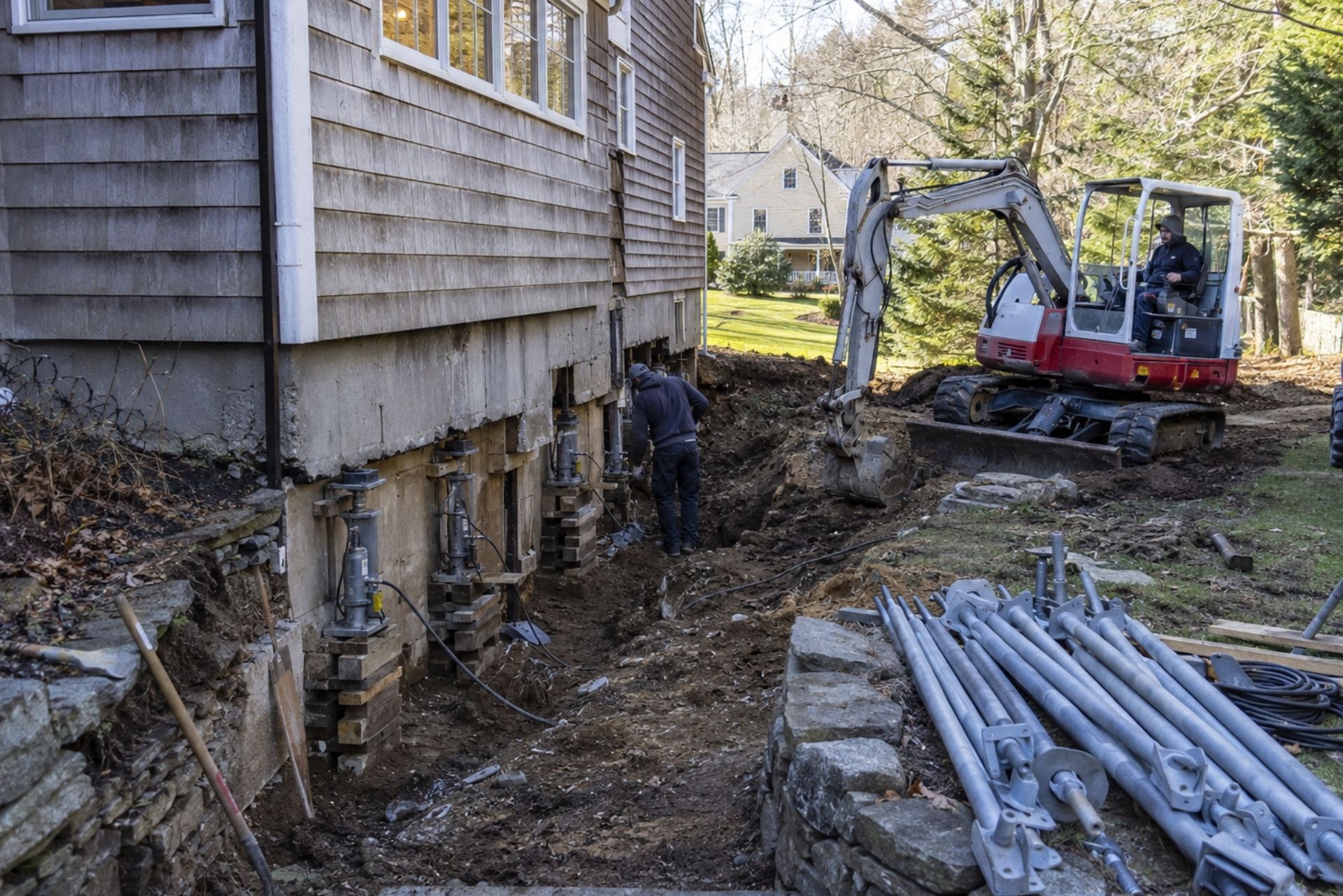
For foundation work specifically, property damage coverage is critical. Underpinning, slab jacking, and wall anchoring all involve forces applied directly to load-bearing structures. A miscalculation or equipment failure can cause cracks, settling, or even partial collapse in the structure being repaired or in neighboring properties. Connecticut contractors should ensure their general liability limits are high enough to cover worst-case scenarios, and policies with aggregate limits below $1 million are generally inadequate for this trade. Contractors working on homes affected by the pyrrhotite-related crumbling foundation crisis face even greater exposure, since the scope and cost of those repairs can be substantial.
Professional Liability for Structural Assessments
Many foundation repair contractors do not just fix problems; they also diagnose them. Offering structural assessments, recommending repair methods, or providing engineering-adjacent opinions creates professional liability exposure. If a contractor evaluates a foundation, declares it stable, and the homeowner later discovers significant deterioration, the contractor could face a negligence claim. General liability does not cover this type of allegation because it stems from professional judgment, not physical work.
Professional liability insurance, sometimes called errors and omissions coverage, fills this gap. It is particularly relevant for contractors who provide written reports, sign off on repair plans, or consult with engineers on project scope. Even verbal assessments can trigger claims if a homeowner relies on that advice and suffers a loss. Connecticut foundation contractors who offer any form of diagnostic service should carry this coverage alongside their general liability policy.
Workers' Compensation Compliance in CT
Connecticut law requires all employers, including contractors with even one employee, to carry workers' compensation insurance. There is no minimum employee threshold; a single hire triggers the mandate. Foundation repair work is physically demanding and involves heavy machinery, confined spaces, and exposure to concrete dust and chemical grouts. The injury rate in this trade is higher than in many other construction specialties, and a single back injury or equipment-related accident can generate a claim that exceeds $100,000 in medical costs and lost wages.
The state enforces compliance through the Connecticut Workers' Compensation Commission, and contractors found operating without coverage face fines, stop-work orders, and potential criminal charges. Even sole proprietors who technically can exempt themselves should consider purchasing a policy, since a serious injury without coverage could mean personal bankruptcy. Connecticut's
contractor insurance requirements are strict on this point, and general contractors hiring subcontractors will typically verify workers' compensation certificates before allowing anyone on site.
Connecticut Licensing and Insurance Requirements
Connecticut does not issue a single "foundation repair license," but it does impose registration and insurance obligations on contractors performing residential work. Understanding these requirements is essential for legal operation and for securing contracts with homeowners and general contractors who demand proof of compliance.
DCP Registration and Proof of Coverage
Any contractor performing home improvement work in Connecticut, including foundation repair, must register with the Department of Consumer Protection (DCP) as a Home Improvement Contractor. This registration requires proof of general liability insurance with minimum limits of $100,000 per occurrence. The DCP maintains a public registry, and homeowners can verify a contractor's status before signing a contract. Operating without valid registration is a violation of Connecticut General Statutes and can result in fines, inability to enforce contracts, and reputational damage.
The registration renewal process requires updated certificates of insurance, so maintaining continuous coverage is not optional. Lapses in coverage can trigger automatic suspension of registration. Contractors should work with their insurance agent to ensure certificates are filed with the DCP promptly and that renewal dates align with registration deadlines. State-specific business insurance requirements outline these obligations in detail.
Surety Bonds vs. Liability Insurance
Surety bonds and liability insurance serve different purposes, and confusing the two is a common mistake among newer contractors. A surety bond is a three-party agreement that guarantees the contractor will fulfill contractual obligations. If the contractor fails to complete a project or violates the terms of the agreement, the homeowner can file a claim against the bond. The bonding company pays the claim and then seeks reimbursement from the contractor.
Liability insurance, by contrast, protects the contractor from financial loss due to third-party claims. It pays out on the contractor's behalf and does not require repayment. Connecticut requires home improvement contractors to carry liability insurance but does not universally mandate surety bonds for foundation work. That said, some municipal projects and larger commercial contracts do require bonding. Contractors who plan to bid on public or institutional foundation repair work should secure a surety bond in addition to their liability coverage.
Comparing Primary Coverage Types
Selecting the right mix of policies depends on the size of the operation, the types of projects undertaken, and the specific risks inherent in foundation repair. A clear comparison of coverage types helps contractors identify gaps in their current protection.
Coverage Comparison Table
| Coverage Type | What It Covers | Who Needs It | Typical Annual Cost (CT) |
|---|---|---|---|
| General Liability | Third-party bodily injury, property damage, personal injury | All contractors | $4,500 - $7,000 |
| Professional Liability | Errors in assessments, design recommendations, consulting | Contractors offering diagnostic services | $1,200 - $3,500 |
| Workers' Compensation | Employee injuries, lost wages, medical costs | Any contractor with employees | Varies by payroll and class code |
| Commercial Auto | Vehicle accidents, cargo damage during transit | Contractors using company vehicles | $1,800 - $4,000 |
| Inland Marine | Equipment damage, theft, transit loss | Contractors with specialized tools and machinery | $500 - $2,000 |
| Pollution Liability | Environmental contamination, mold remediation | Contractors working near hazardous materials or in older homes | $1,500 - $4,000 |
This table reflects approximate ranges for small to mid-size foundation repair operations in Connecticut. Actual premiums depend on claims history, revenue, and specific policy terms.
Managing Risks Specific to Foundation Work
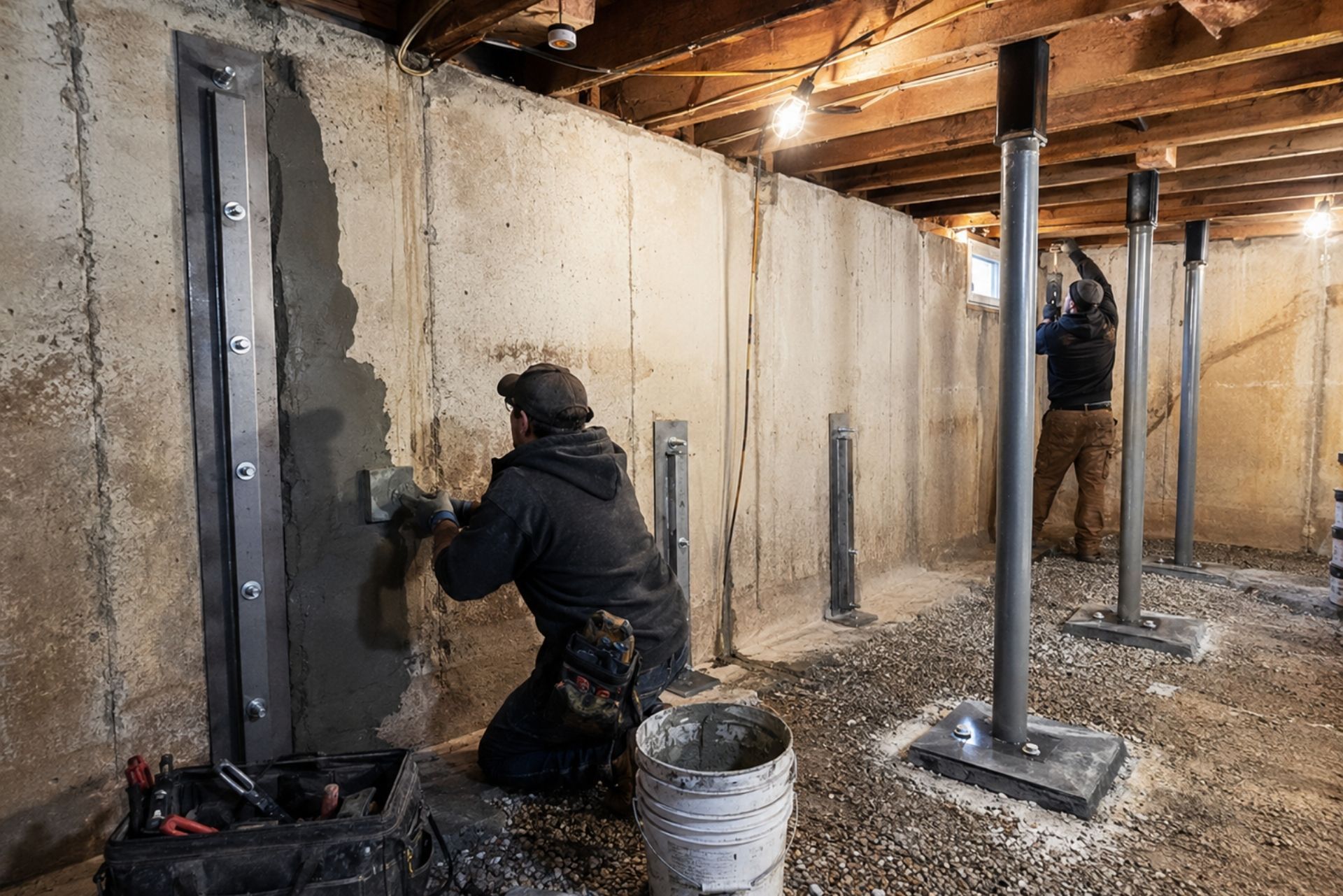
Foundation repair contractors face hazards that standard construction policies often exclude or limit. Two of the most significant are environmental contamination and equipment loss, both of which require targeted endorsements or standalone policies.
Pollution and Mold Endorsements
Standard general liability policies almost universally exclude pollution-related claims. For foundation contractors, this exclusion is a serious gap. Excavation work can disturb contaminated soil, and waterproofing applications involve chemical sealants that may trigger environmental claims if they migrate into groundwater or neighboring properties. Mold is another frequent issue: foundation moisture problems often coincide with mold growth, and homeowners may allege that the contractor's work caused or worsened the condition.
A pollution liability endorsement or standalone policy covers cleanup costs, third-party bodily injury from exposure, and legal defense. Contractors working on older Connecticut homes, particularly those with crumbling foundations caused by pyrrhotite, should pay close attention to this coverage. The demolition and replacement process for affected foundations can release particulate matter and disturb surrounding soil, creating pollution exposure that a standard policy would not cover.
Inland Marine for Specialized Equipment
Foundation repair relies on expensive, specialized equipment: hydraulic piers, helical anchors, slab lifting pumps, and laser levels that can cost thousands of dollars each. Standard commercial property insurance covers items stored at a fixed business location, but it does not protect equipment in transit or on a job site. Inland marine insurance fills this gap by covering tools and machinery wherever they are used.
For a foundation contractor who moves equipment between multiple job sites each week, the risk of theft, accidental damage, or loss during transport is real. A single stolen hydraulic pump can cost $8,000 to $15,000 to replace. Inland marine policies are relatively inexpensive, often running between $500 and $2,000 annually, and they provide peace of mind that a theft or accident will not force the business to absorb a major unplanned expense. Contractors should maintain an updated equipment schedule with their insurer to ensure all high-value items are listed on the policy.
Common Questions About Foundation Repair Insurance
Frequently Asked Questions
Do sole proprietors in Connecticut need workers' compensation insurance? Sole proprietors without employees are not legally required to carry workers' compensation in Connecticut. However, many general contractors will not hire subcontractors who lack this coverage, and a serious on-the-job injury without a policy could result in devastating personal financial loss.
Does general liability cover damage to the foundation being repaired? No. General liability covers damage to third-party property, not to the work product itself. Damage to the foundation under repair would typically fall under a contractor's professional liability or a specific installation floater, depending on the circumstances.
How does the pyrrhotite foundation crisis affect insurance costs? Contractors working on pyrrhotite-affected homes may face higher premiums due to the complexity and cost of these repairs. The ongoing funding and legislative efforts surrounding this crisis have increased awareness of the risks involved, and insurers have adjusted their underwriting accordingly.
Can a contractor bundle multiple coverage types into one policy? Yes. A Business Owner's Policy, or BOP, bundles general liability with commercial property coverage at a discounted rate. Workers' compensation, commercial auto, and inland marine are typically purchased separately but can often be managed through the same insurer for convenience.
What happens if my insurance lapses during a project? A lapse in coverage can void your DCP registration, expose you to personal liability for any claims that arise during the gap, and potentially breach your contract with the homeowner or general contractor. Continuous coverage is essential.
Making the Right Choice for Your Business
Insurance for foundation repair contractors in Connecticut is not a one-size-fits-all proposition. The right policy package depends on whether the business employs workers, offers diagnostic assessments, handles environmental hazards, or works on pyrrhotite-affected homes. A contractor who only performs exterior waterproofing has different needs than one who installs helical piers or replaces entire foundations.
The most common mistake is purchasing the minimum required coverage and assuming it will be sufficient. A $100,000 general liability policy meets the DCP registration threshold, but it will not survive a serious property damage claim on a $500,000 home. Contractors should work with an insurance agent who understands the specific risks of concrete and foundation work and can tailor a package that reflects the actual exposure.
Review your policies annually, update equipment schedules, and verify that endorsements for pollution, mold, and professional liability remain active. The cost of proper insurance coverage for foundation repair contractors in Connecticut is a fraction of what a single uninsured claim could cost. Treat it as an investment in the long-term survival of your business, not just a regulatory obligation.
About The Author:
Anton Reed
As Managing Principal of Adion Financial Group, I’m committed to helping individuals and businesses achieve financial security through strategic insurance and planning solutions. My focus is on building trust, delivering clarity, and ensuring every client receives expert guidance backed by experience and integrity.
Contact Us
Personal INSURANCE Coverage
Comprehensive Coverage for Every Personal Need
Business Insurance Solutions
Professional Liability Coverage for Service-Based Businesses
General Liability Insurance
Protects businesses from lawsuits related to injuries and property damage.
INDUSTRIES WE SERVE
Specialized Coverage for Leading Connecticut Industries
Contractors
Insurance
Whether you’re a general contractor or a specialized tradesperson, we offer coverage that protects against job site risks, equipment damage, and liability claims.

Commercial Truck Insurance
Whether you operate a single truck or an entire fleet, we provide coverage for cargo, liability, and physical damage to keep your business moving.

Restaurant Business Insurance
Keep your restaurant, café, or bar protected with coverage for property damage, liquor liability, foodborne illness, and employee injuries.

Commercial Real Estate Insurance
Safeguard your commercial properties, rental units, and office spaces from property damage, liability claims, and tenant-related risks.

“I’ve been with AFG for years. Their service is second to none, and I always feel confident that I’m covered.”
Sarah K.
Real Stories.
Real Protection.
Real Trust.
See Why Businesses and Families Trust Us for Coverage.

Quick Answers to Your Insurance Questions
Frequently Asked Questions
about Adion Financial Group
Understanding Insurance Starts with the Right Information
1. What types of insurance do you offer?
At Adion Financial Group, we offer a wide range of insurance options designed to meet the needs of both individuals and businesses. For individuals, we provide coverage for personal auto, home, renters, life, and health insurance. Whether you're looking to protect your home, your car, or your loved ones, we have a solution tailored to your needs.
2. How do I get a quote for insurance?
Getting an insurance quote with Adion Financial Group is simple and fast. First, visit our website and fill out the quote request form, providing some basic information about the type of insurance you need. If you prefer a more personal touch, you can also contact us directly, and one of our agents will walk you through the process.
3. What should I do if I need to file a claim?
If you need to file a claim, the first step is to notify us immediately. You can either call our office or submit your claim online, depending on your preference. Once we receive your claim, our team will guide you through the necessary steps and help you gather the required information.
4. How can I change my coverage or update my policy?
Making changes to your coverage or updating your policy is easy with Adion Financial Group. Whether you're moving to a new home, adding a vehicle, or expanding your business, we can help you adjust your insurance to reflect your current needs.
5. Why should I choose an independent insurance agency?
Choosing an independent insurance agency like Adion Financial Group provides you with a distinct advantage: we work for you, not an insurance company. Our independent status allows us to shop around with multiple carriers to find the most competitive rates and the best coverage options for your unique situation.
6. How can I make sure I have the right amount of coverage?
Determining the right amount of coverage can be overwhelming, but our team at Adion Financial Group is here to help. The first step is assessing your personal or business assets and identifying the potential risks you face. Whether you're an individual looking to protect your home and car, or a business owner trying to safeguard your employees and property, we will walk you through the different coverage options.
Stay Informed on Insurance Trends and Tips
Insights & Tips to Keep You Informed


Contact Us
Phone
Locations
Connecticut Location
703 Hebron Ave., 3rd Floor, Glastonbury, CT 06033
North Carolina Location
436 East 36th St., Charlotte, NC 28205