
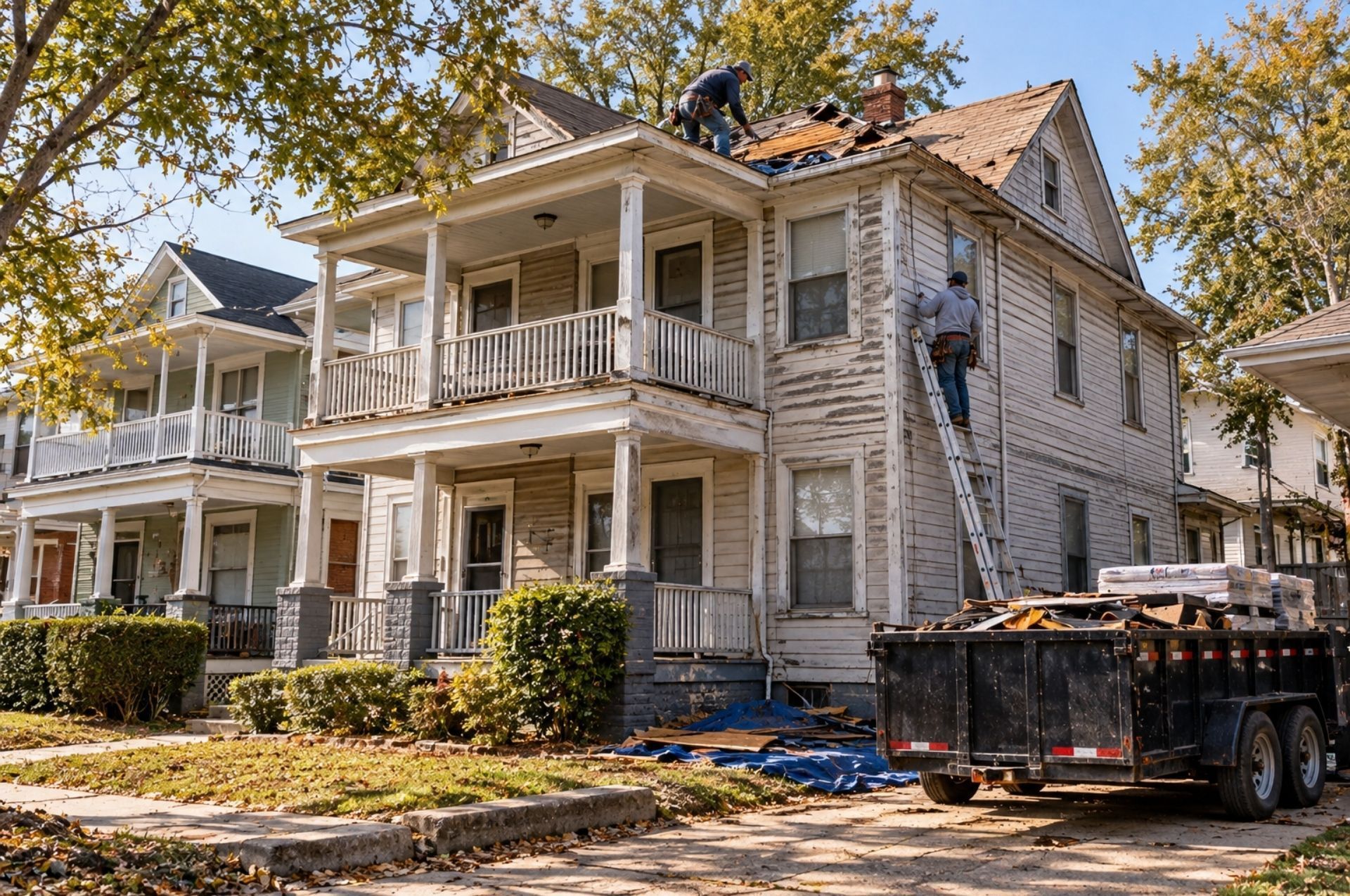
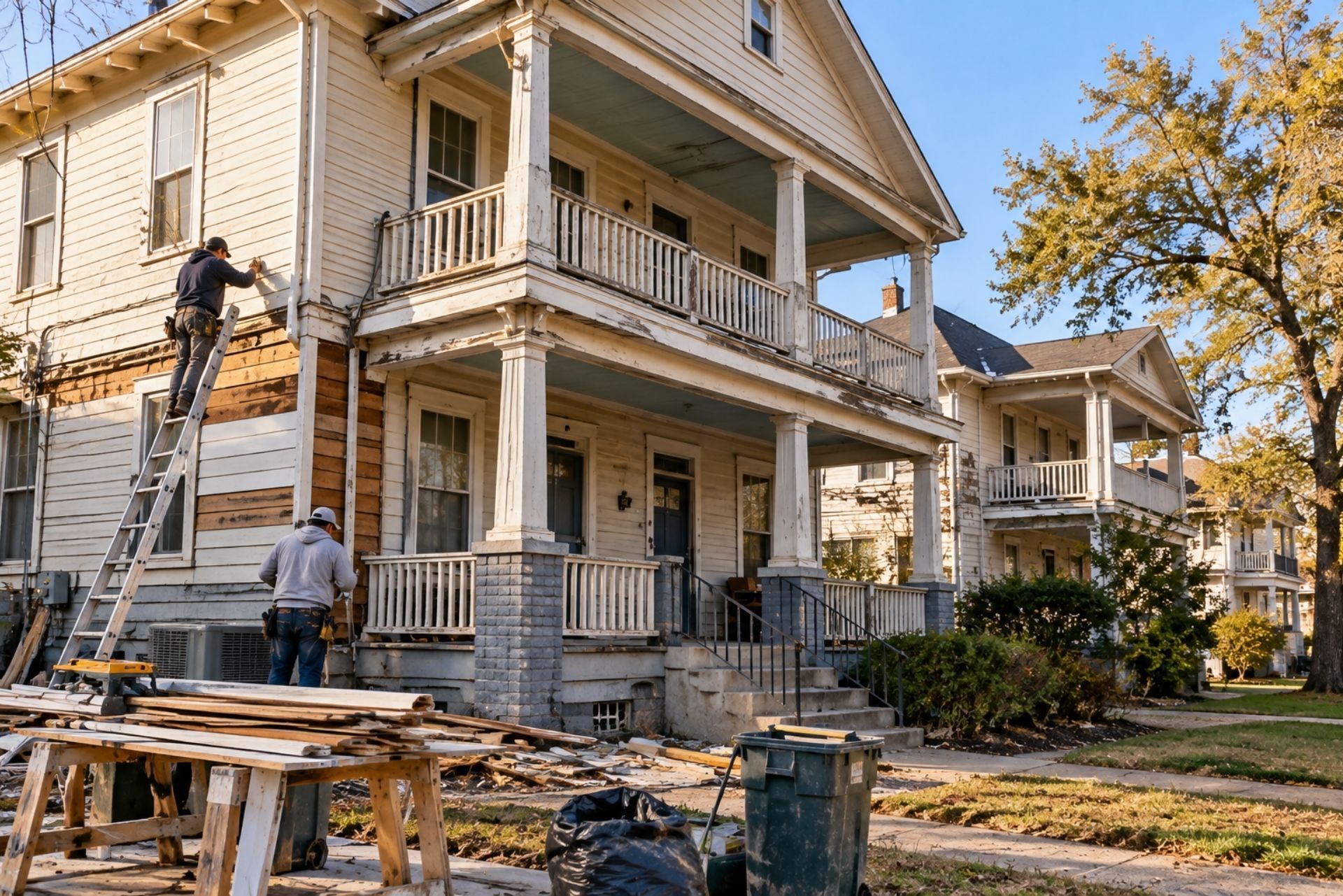
Owning a rental property built decades ago can be a strong investment, but the insurance side of the equation presents distinct hurdles that newer buildings simply do not face. Aging roofs, outdated wiring, galvanized plumbing, and original heating systems all raise questions about eligibility and cost. Insurance has, in fact, moved from a background expense to a deal-level variable that can determine whether a property's returns justify the risk. Understanding the insurance requirements for older rental properties, from inspections and
system upgrades to carrier eligibility, is essential before signing a policy or closing on a purchase. The gap between what a standard policy covers and what an aging building actually needs can leave landlords exposed to five- and six-figure losses they assumed were covered. This guide breaks down the specific systems insurers scrutinize, the coverage types that matter most, and the practical steps that keep premiums manageable while protecting the investment.
Unique Insurance Challenges for Older Rental Properties
Properties constructed before 1970 carry a fundamentally different risk profile than modern builds. Building codes have changed substantially over the past half-century, and materials that were standard in mid-century construction, such as cast iron drain lines, asbestos insulation, and fuse panels, are now considered liabilities by underwriters. Carriers evaluate older rentals not just on claims history but on the probability that aging systems will cause a loss event in the near future.
Why Age Impacts Your Premiums and Eligibility
Insurers price risk based on loss probability, and older structures present a statistically higher chance of fire, water damage, and structural failure. A 60-year-old copper supply line has a different expected lifespan than PEX installed last year, and underwriters account for that difference. Many carriers impose strict eligibility caps for roofs, such as 25 years for shingle and 50 years for tile or metal materials (https://roofingcalculator.com/roof-replacement-insurance-guide), while electrical panels manufactured by certain brands or original plumbing may also lead to declination. Those that do offer coverage frequently attach higher deductibles, exclusions for specific perils, or mandatory upgrade timelines as conditions of the policy.
Common Red Flags: Wiring, Plumbing, and Roof Age
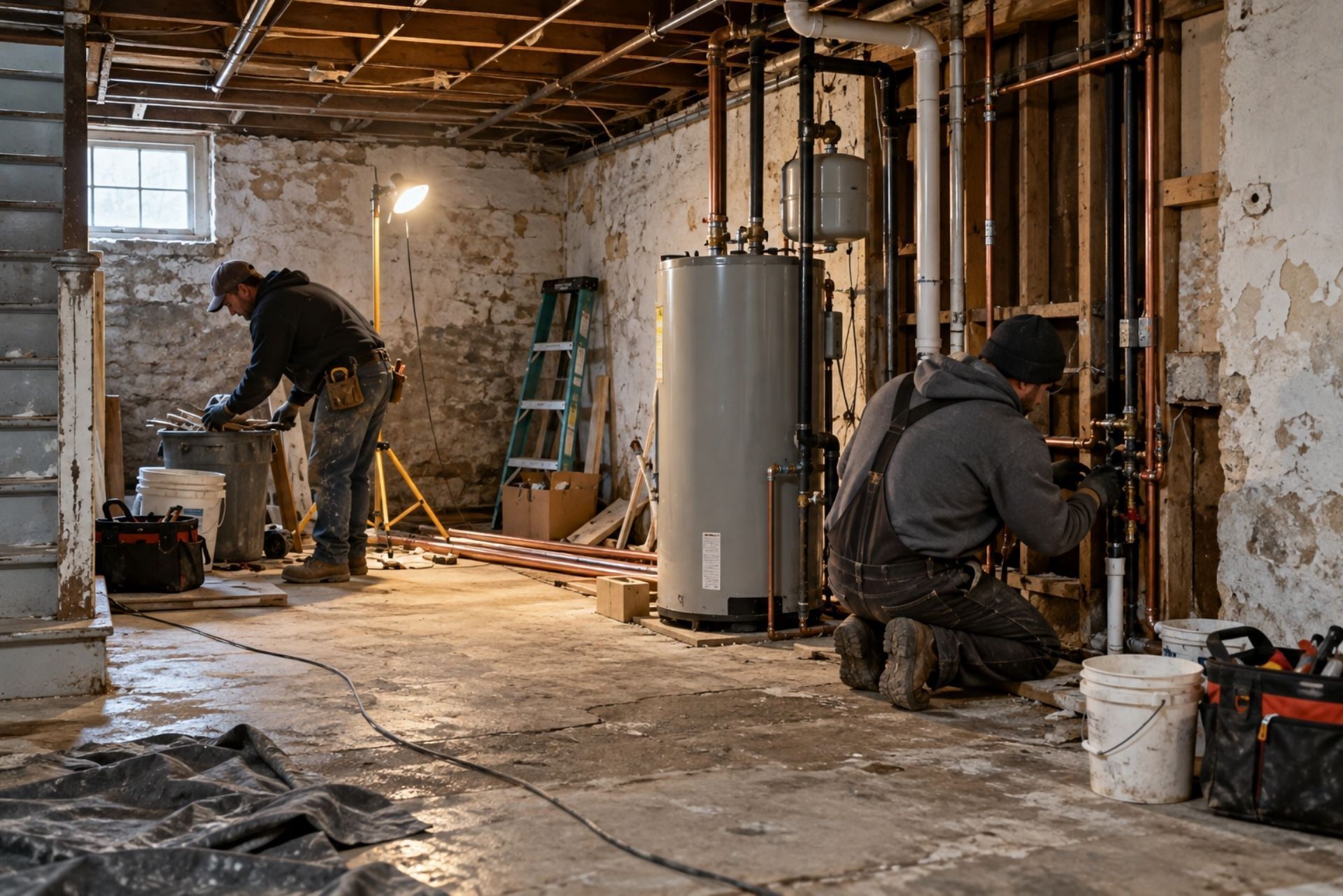
Three systems draw the most scrutiny during underwriting. Electrical systems with knob-and-tube wiring, aluminum branch wiring, or Federal Pacific and Zinsco panels are considered fire hazards. Plumbing that relies on polybutylene supply lines or cast iron waste stacks is flagged for burst and leak risk. Roof coverings beyond their rated lifespan, particularly in hail-prone or hurricane-exposed regions, trigger either declination or actual cash value coverage instead of replacement cost. Standard water heater tanks older than 12 to 15 years also frequently trigger replacement demands from insurers, while tankless systems are often permitted to remain in service for up to 20 years due to their lower risk profiles.
Essential Coverage Types for Aging Buildings
Selecting the right policy structure for an older rental property is not simply a matter of finding the cheapest premium. The coverage form, valuation method, and endorsements determine whether a claim payment actually makes the landlord whole or leaves a significant shortfall.
Replacement Cost vs. Actual Cash Value
Replacement cost coverage pays to rebuild or repair using current materials and labor rates, without deducting for depreciation. Actual cash value, by contrast, subtracts depreciation from the payout, which can be devastating on a 50-year-old property where nearly every component has depreciated substantially. A roof that cost significantly less to install 18 years ago might have a minimal actual cash value today, yet replacing it in 2026 could cost between $25,000 and $30,000 (https://terrysmithagency.com/michigan-landlord-insurance/). Landlords who accept actual cash value policies to save on premiums often discover the gap only after a loss, when the claim check covers a fraction of the repair bill.
Ordinance or Law Coverage for Building Code Compliance
This endorsement is arguably the most important add-on for older rental properties. When a covered loss damages a significant portion of a building, local code enforcement may require that the entire structure be brought up to current building codes during reconstruction. Without ordinance or law coverage, the cost of upgrading electrical, plumbing, HVAC, and structural elements to modern standards falls entirely on the property owner. A standard policy pays only to restore what was damaged, not to upgrade what was outdated.
General Liability Protection for Landlords
Liability exposure on older rentals extends beyond the usual slip-and-fall scenarios. Lead paint, asbestos, and deteriorating common-area infrastructure create claim potential that newer properties rarely face. A $1 million liability limit is the standard 2026 industry recommendation for
residential landlords to protect against rising litigation costs (https://www.insurancegeek.com/homeowners-insurance/landlord-insurance-cost/), with an umbrella policy layered on top for portfolios with
multiple aging units. California landlords should also note that effective January 1, 2026,
AB 628 requires landlords to provide and maintain working stoves and refrigerators as part of state habitability standards, adding another compliance dimension that intersects with both liability and property coverage.
Comparing Standard vs. Specialized Coverage
Not all landlord policies are created equal, and the differences between a basic fire policy and a comprehensive landlord package are significant for aging properties. A basic named-peril policy covers only the specific causes of loss listed in the contract, while a comprehensive form covers all perils except those explicitly excluded.
Table: Basic Fire Policies vs. Comprehensive Landlord Insurance
| Feature | Basic Fire / Named-Peril Policy | Comprehensive Landlord Policy |
|---|---|---|
| Covered perils | Fire, lightning, limited list | All perils except exclusions |
| Water damage | Often excluded or limited | Typically included (not flood) |
| Loss of rental income | Not included | Included up to 12 months |
| Liability coverage | Not included | $300K to $1M+ per occurrence |
| Ordinance or law | Not available | Available as endorsement |
| Valuation method | Actual cash value | Replacement cost option |
| Vandalism / tenant damage | Often excluded | Covered with conditions |
| Typical annual cost | Lower premium | Higher premium |
The lower cost of a basic fire policy is appealing, but the coverage gaps are substantial. Landlords who own properties built before 1980 should strongly consider comprehensive forms that include ordinance or law endorsements and replacement cost valuation.
Preparing Your Property for an Insurance Inspection
Most carriers require a physical inspection before binding coverage on older rental properties, and some conduct inspections within the first 60 days after the policy takes effect. Failing an inspection can result in policy cancellation, non-renewal, or mandatory upgrade requirements with tight deadlines.
Required Documentation for Historical or Aged Assets
Inspectors and underwriters want proof that critical systems have been maintained, updated, or evaluated by licensed professionals. Landlords should prepare the following before an inspection:
- A licensed electrician's certification of the electrical system, including panel age, wiring type, and grounding status
- Plumbing inspection reports showing supply line material, water heater age, and waste line condition
- Roof inspection reports with estimated remaining useful life and photographs of flashing, penetrations, and drainage
- HVAC service records demonstrating annual maintenance and system age
- Permits for any renovations or system replacements completed in the past 10 years
Having this documentation ready signals to underwriters that the property is actively managed, which can influence both eligibility and pricing.
Strategic Upgrades to Lower Your Insurance Costs
Not every upgrade delivers the same return in premium savings. Prioritize the systems that carriers flag most frequently. Replacing an older roof can trigger premium reductions of 10% to 30% in high-risk zones or an average of 15% to 20% nationally (https://premier-roofing.com/blog/roofing-impact-on-insurance-premiums/). Upgrading from a fuse panel or outdated breaker panel to a modern 200-amp service with arc-fault breakers removes one of the most common declination triggers. Replacing galvanized or polybutylene supply lines with PEX or copper eliminates water damage concerns that drive up rates. These upgrades carry real costs, but they also protect carrier eligibility and can pay for themselves through reduced premiums over a five- to seven-year period.
Common Questions About Insuring Older Rentals
Landlords with aging properties tend to encounter the same set of questions when shopping for coverage. The answers are not always intuitive, and misunderstanding them can lead to coverage gaps or unnecessary spending.
FAQ: Can I get insurance if my rental has knob-and-tube wiring?
It is increasingly difficult to find coverage for properties with active knob-and-tube wiring in 2026. That said, some carriers may consider coverage if a licensed electrician certifies the system is grounded and safe. Expect higher premiums and a limited selection of willing insurers, and plan for a full rewire as a near-term capital expense.
FAQ: Why is my insurance more expensive than the house's market value?
Insurance premiums are based on reconstruction cost, not market value. A property worth $120,000 on the market might cost $220,000 to rebuild to current code, especially if ordinance or law requirements force full system upgrades during reconstruction. The land value, which is included in market price, is irrelevant to the insurer because it does not need to be rebuilt.
FAQ: Does standard insurance cover lead paint liability?
Most standard landlord policies exclude pollution-related claims, and lead paint falls under that exclusion. Landlords who own pre-1978 properties should consider a separate environmental liability policy or a pollution liability endorsement. Lead paint claims can result in six-figure settlements, particularly when children are involved, so this gap deserves attention.
FAQ: Will my policy pay for modern building code upgrades?
A standard policy will not. Only an ordinance or law endorsement covers the cost of bringing undamaged portions of a building up to current code after a covered loss. This endorsement typically offers coverage in tiers of 10%, 25%, or 50% of the dwelling limit (https://justclaims.ai/blog/ordinance-or-law-coverage-a-b-c/) and is one of the most cost-effective additions for any property built before 1990.
Making the Right Choice for Your Investment
Insuring older rental properties requires more than simply finding a willing carrier and paying the premium. The interplay between roof age, wiring type, plumbing materials, heating systems, and local code requirements creates a web of eligibility criteria that varies by insurer and by state. Landlords who approach insurance proactively, by documenting system conditions, completing strategic upgrades, and selecting coverage forms that account for code compliance costs, position themselves to both secure coverage and protect their returns.
The most expensive insurance mistake is not an overpriced premium; it is a claim that reveals a coverage gap large enough to wipe out years of rental income. Treat insurance not as a fixed annual cost but as a variable that responds directly to how well the property is maintained and how carefully the policy is structured. Speak with an independent insurance agent who specializes in rental properties, request quotes from both standard and surplus lines carriers, and review every policy for ordinance or law coverage, valuation method, and system-specific exclusions before binding.
About The Author:
Anton Reed
As Managing Principal of Adion Financial Group, I’m committed to helping individuals and businesses achieve financial security through strategic insurance and planning solutions. My focus is on building trust, delivering clarity, and ensuring every client receives expert guidance backed by experience and integrity.
Contact Us
Personal INSURANCE Coverage
Comprehensive Coverage for Every Personal Need
Business Insurance Solutions
Professional Liability Coverage for Service-Based Businesses
General Liability Insurance
Protects businesses from lawsuits related to injuries and property damage.
INDUSTRIES WE SERVE
Specialized Coverage for Leading Connecticut Industries
Contractors
Insurance
Whether you’re a general contractor or a specialized tradesperson, we offer coverage that protects against job site risks, equipment damage, and liability claims.

Commercial Truck Insurance
Whether you operate a single truck or an entire fleet, we provide coverage for cargo, liability, and physical damage to keep your business moving.

Restaurant Business Insurance
Keep your restaurant, café, or bar protected with coverage for property damage, liquor liability, foodborne illness, and employee injuries.

Commercial Real Estate Insurance
Safeguard your commercial properties, rental units, and office spaces from property damage, liability claims, and tenant-related risks.

“I’ve been with AFG for years. Their service is second to none, and I always feel confident that I’m covered.”
Sarah K.
Real Stories.
Real Protection.
Real Trust.
See Why Businesses and Families Trust Us for Coverage.

Quick Answers to Your Insurance Questions
Frequently Asked Questions
about Adion Financial Group
Understanding Insurance Starts with the Right Information
1. What types of insurance do you offer?
At Adion Financial Group, we offer a wide range of insurance options designed to meet the needs of both individuals and businesses. For individuals, we provide coverage for personal auto, home, renters, life, and health insurance. Whether you're looking to protect your home, your car, or your loved ones, we have a solution tailored to your needs.
2. How do I get a quote for insurance?
Getting an insurance quote with Adion Financial Group is simple and fast. First, visit our website and fill out the quote request form, providing some basic information about the type of insurance you need. If you prefer a more personal touch, you can also contact us directly, and one of our agents will walk you through the process.
3. What should I do if I need to file a claim?
If you need to file a claim, the first step is to notify us immediately. You can either call our office or submit your claim online, depending on your preference. Once we receive your claim, our team will guide you through the necessary steps and help you gather the required information.
4. How can I change my coverage or update my policy?
Making changes to your coverage or updating your policy is easy with Adion Financial Group. Whether you're moving to a new home, adding a vehicle, or expanding your business, we can help you adjust your insurance to reflect your current needs.
5. Why should I choose an independent insurance agency?
Choosing an independent insurance agency like Adion Financial Group provides you with a distinct advantage: we work for you, not an insurance company. Our independent status allows us to shop around with multiple carriers to find the most competitive rates and the best coverage options for your unique situation.
6. How can I make sure I have the right amount of coverage?
Determining the right amount of coverage can be overwhelming, but our team at Adion Financial Group is here to help. The first step is assessing your personal or business assets and identifying the potential risks you face. Whether you're an individual looking to protect your home and car, or a business owner trying to safeguard your employees and property, we will walk you through the different coverage options.
Stay Informed on Insurance Trends and Tips
Insights & Tips to Keep You Informed
Contact Us
Phone
Locations
Connecticut Location
703 Hebron Ave., 3rd Floor, Glastonbury, CT 06033
North Carolina Location
436 East 36th St., Charlotte, NC 28205