
Connecticut Mini-Split Installation Contractor Insurance

or call us: (888) 585-5188
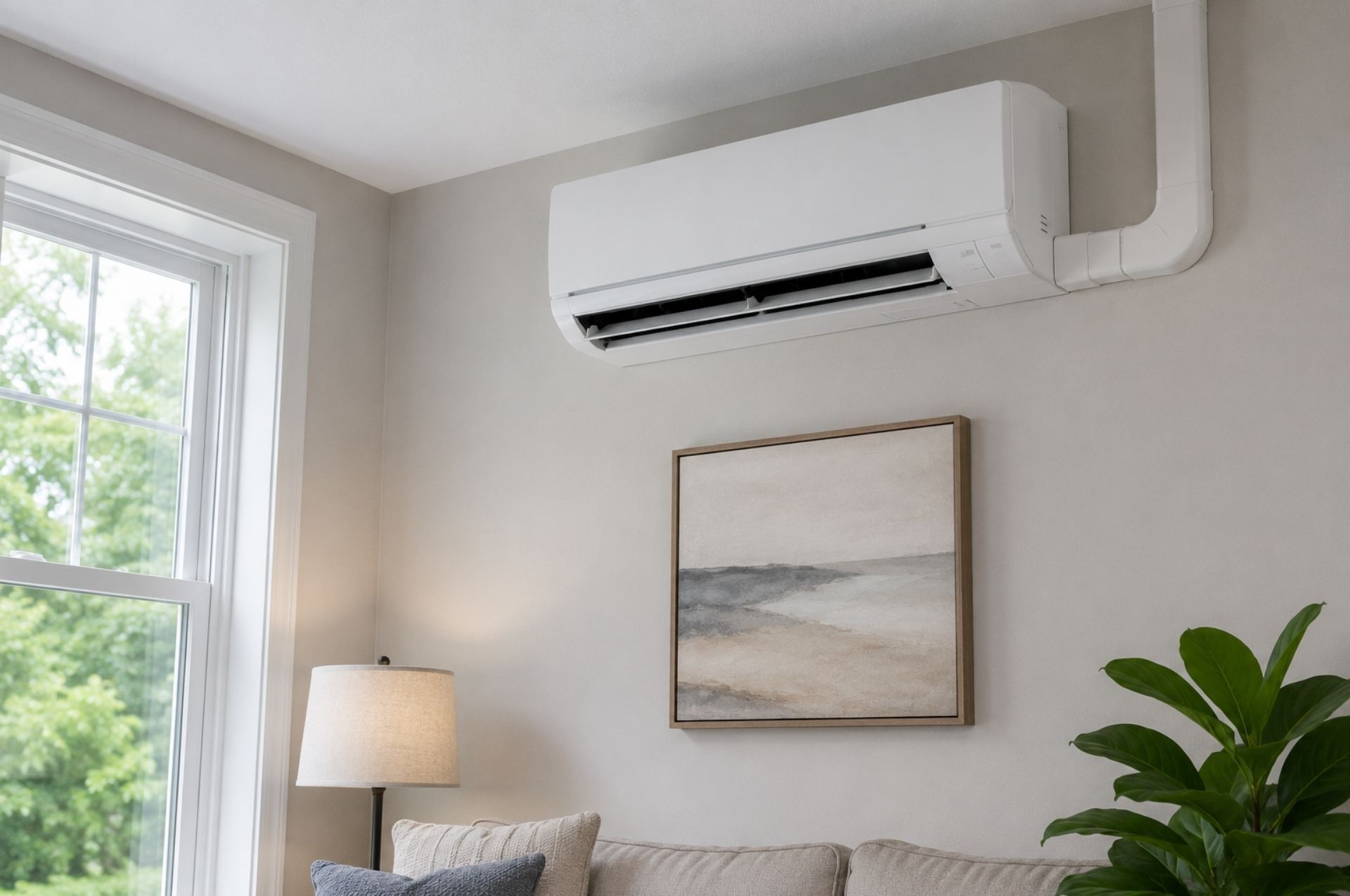
Connecticut's mini-split heat pump market has grown sharply over the past several years, driven by state energy efficiency mandates and generous rebate programs. Homeowners across the state are
taking advantage of heat pump incentive programs that make ductless systems an attractive upgrade, and contractors who specialize in these installations are busier than ever. That growth, however, comes with a corresponding rise in exposure to liability claims, property damage, and regulatory scrutiny. For any contractor focused on ductless HVAC work in Connecticut, carrying the right insurance is not a luxury or an afterthought: it is a prerequisite for staying licensed, winning contracts, and surviving a single bad day on the job. The stakes are real. A refrigerant leak that damages a homeowner's hardwood floors, a fall from a ladder during an outdoor unit mount, or a warranty dispute over system performance can each generate claims that threaten a small business's survival. Connecticut's regulatory environment adds its own layer of complexity, with specific bonding requirements, workers' compensation mandates, and licensing rules that differ from neighboring states. Understanding what coverage a mini-split installation contractor actually needs, versus what an insurance agent might try to sell, requires a clear look at the risks specific to this trade. The following sections break down the core policies, specialized exposures, and practical decisions that shape a sound insurance program for ductless HVAC contractors operating in Connecticut.
Core Insurance Requirements for Connecticut HVAC Contractors
Connecticut holds HVAC contractors to a defined set of insurance and bonding standards before they can legally operate. The Department of Consumer Protection oversees mechanical contractor licensing, and applicants must demonstrate proof of insurance as part of the process. These requirements are not suggestions: operating without them can result in license revocation, fines, and personal liability for any claims that arise.
The cost of maintaining proper coverage varies based on revenue, crew size, claims history, and the specific types of work performed. Mini-split installation contractors typically face moderate premiums compared to general HVAC contractors who also handle gas furnaces or large commercial systems, but the baseline requirements remain the same across the trade.
General Liability for Property Damage and Injuries
Commercial general liability (CGL) insurance is the foundation of any contractor's policy portfolio. It covers third-party bodily injury and property damage arising from operations, completed work, or general business activities. For a mini-split installer, common CGL claims include damage to a customer's wall during line set routing, injury to a homeowner who trips over equipment left on a job site, or water damage from an improperly sealed condensate drain discovered weeks after installation.
Most Connecticut general contractors and property managers require subcontractors to carry at least $1 million per occurrence and $2 million aggregate in CGL coverage before allowing them on a project. HVAC-specific policies often range from $1,500 to $4,000 annually for small crews, though premiums fluctuate based on annual revenue and claims history.
State-Mandated Workers' Compensation Rules
Connecticut requires workers' compensation insurance for virtually all employers, with very few exceptions. Even a sole proprietor who hires a single part-time helper must carry a policy. The penalties for non-compliance are severe: the state can issue stop-work orders, impose fines of up to $50,000, and hold business owners personally liable for any workplace injuries.
The good news for Connecticut HVAC contractors is that premium rates have been trending downward. The state has approved a 4.9% average rate cut for workers' compensation premiums in the voluntary market and a 1.5% cut in the residual market for 2026, reflecting improved workplace safety data across the construction trades. That said, mini-split installation carries its own risk profile: ladder falls, electrical contact injuries, and repetitive strain from mounting heavy outdoor units are the most frequent claim types in this specialty.
Licensing Bonds vs. Liability Insurance
A common point of confusion among newer contractors is the difference between a surety bond and a liability insurance policy. Connecticut requires mechanical contractors to post a surety bond, typically in the range of $5,000 to $25,000, as a condition of licensure. This bond protects consumers if a contractor fails to complete work, violates code, or otherwise breaches contractual obligations.
A surety bond does not replace liability insurance. If a contractor causes property damage or an injury, the bond will not cover it. The bond exists to guarantee performance and regulatory compliance, while insurance covers the financial consequences of accidents, errors, and unforeseen events. Contractors need both, and confusing the two is a mistake that can leave a business dangerously exposed.
Specific Risks in Mini-Split Installation and Service
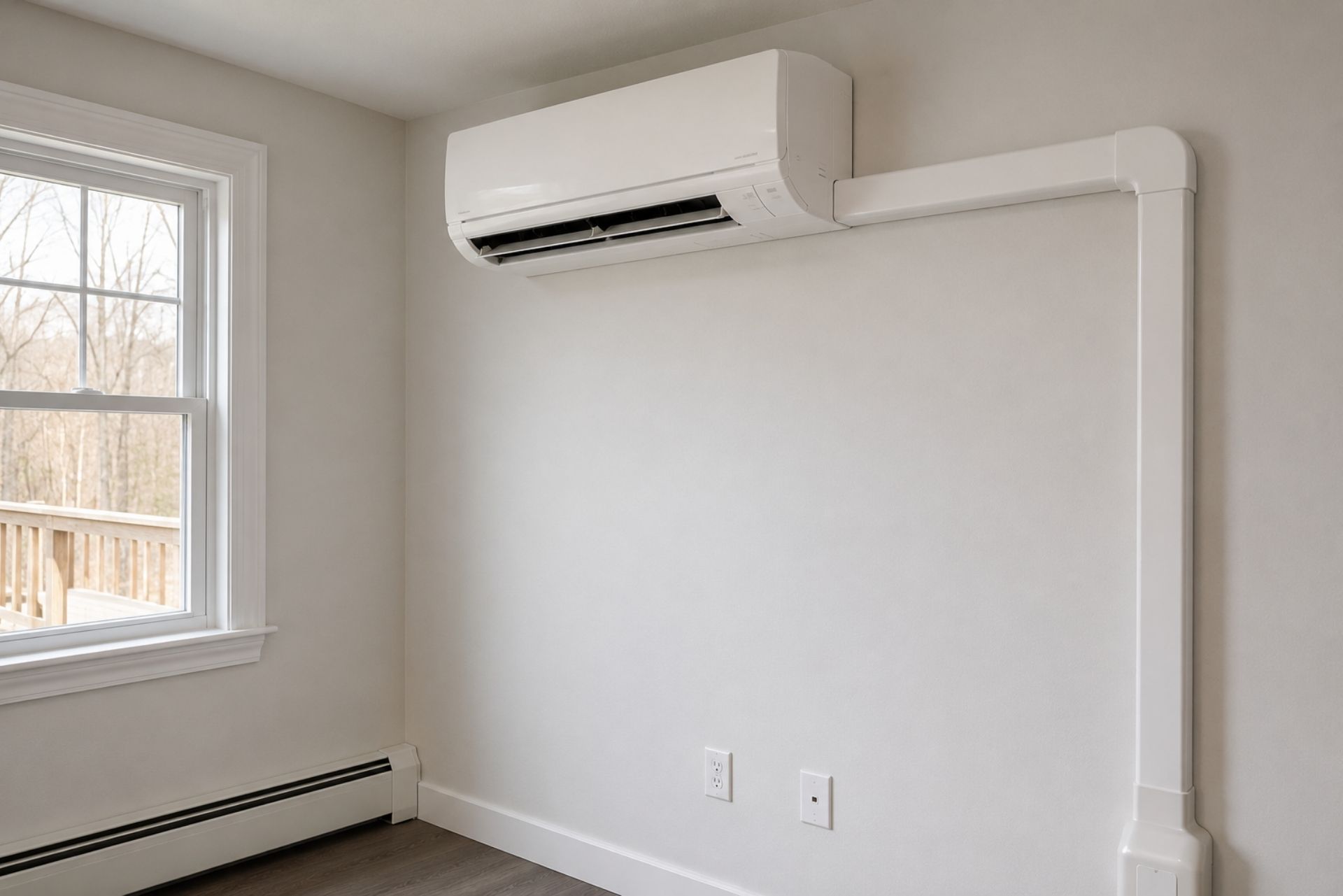
Ductless mini-split systems present a distinct risk profile compared to traditional forced-air HVAC work. The refrigerant lines, electrical connections, and exterior mounting requirements each introduce exposures that general liability policies may not fully address without proper endorsements or specialty coverage.
The HVAC industry is also facing evolving insurance trends in 2026, including rising claim severity related to refrigerant regulations and energy performance disputes. Contractors who understand these risks can structure their coverage to match.
Refrigerant Handling and Environmental Liability
Mini-split systems use refrigerants that are subject to EPA regulations under Section 608 of the Clean Air Act. Improper handling, accidental release, or failure to recover refrigerant during system decommissioning can trigger environmental liability claims. While R-410A has been the standard for years, the industry transition toward lower-GWP alternatives like R-32 and R-454B introduces new training requirements and potential exposure to claims if contractors are not certified to handle these newer substances.
Standard CGL policies often exclude pollution-related claims, which means a refrigerant release that contaminates soil or triggers an EPA investigation may not be covered. Contractors should consider a pollution liability endorsement or a standalone environmental policy, especially those who service older systems that may still contain R-22.
Professional Liability for Energy Efficiency Claims
One of the most underappreciated risks for mini-split contractors is professional liability exposure tied to energy performance claims. Homeowners who invest in ductless systems often expect specific energy savings, and contractors who make verbal or written promises about performance may find themselves facing claims if those savings do not materialize.
Professional liability insurance, sometimes called errors and omissions (E&O) coverage, protects against claims arising from faulty advice, incorrect system sizing, or design errors. A contractor who recommends a single-zone system for a space that clearly requires multi-zone coverage, for example, could face a claim if the homeowner's energy bills increase rather than decrease. This coverage is not required by Connecticut law, but it is increasingly valuable as customers become more sophisticated about energy performance expectations.
Comparing Essential vs. Optional Coverages
Not every policy is mandatory, and not every optional coverage is worth the premium. The right mix depends on business size, the types of projects undertaken, and the contractor's tolerance for self-insuring certain risks. The table below provides a clear comparison of what is required versus what is recommended for contractors focused on mini-split installation in Connecticut.
Coverage Comparison Table
| Coverage Type | Required or Optional | Typical Annual Cost | What It Covers |
|---|---|---|---|
| General Liability | Required for licensing | $1,500 - $4,000 | Property damage, bodily injury, completed operations |
| Workers' Compensation | Required if any employees | $2,500 - $8,000+ | Employee injuries, lost wages, medical bills |
| Surety Bond | Required for license | $100 - $500 (annual premium) | Consumer protection for incomplete or defective work |
| Commercial Auto | Required if business-owned vehicles | $1,200 - $3,500 | Accidents involving work vehicles |
| Inland Marine | Optional but recommended | $300 - $1,200 | Tools and equipment in transit or at job sites |
| Professional Liability (E&O) | Optional | $800 - $2,500 | Design errors, bad advice, performance claims |
| Pollution Liability | Optional | $500 - $2,000 | Refrigerant releases, environmental contamination |
These figures represent typical ranges for small to mid-size contractors with annual revenues under $500,000. Larger operations or those with prior claims will see higher premiums.
Protecting Your Specialized Equipment and Inventory
Mini-split installation requires a significant investment in specialized tools: vacuum pumps, manifold gauge sets, flaring tools, torque wrenches, and refrigerant recovery machines. A single well-equipped installation van can carry $15,000 to $30,000 worth of tools and materials on any given day. Standard business property policies typically do not cover equipment that is regularly transported off-premises, which creates a gap that many contractors do not discover until after a theft or accident.
Inland Marine Insurance for Tools in Transit
Inland marine insurance is designed specifically to cover property that moves between locations. For mini-split contractors, this means tools stored in a van overnight, equipment left at a job site during a multi-day installation, and inventory like line sets and condensate pumps being transported between a warehouse and a customer's home.
Policies can be written on either a scheduled basis, where each high-value item is listed individually, or on a blanket basis that covers all tools up to a specified limit. Blanket coverage is generally more practical for HVAC contractors because the tool inventory changes frequently. Premiums are modest relative to the replacement cost of the equipment, typically running between $300 and $1,200 per year depending on the total insured value.
Commercial Auto for Installation Vans
Any vehicle titled to the business or used primarily for business purposes requires a commercial auto policy. Personal auto insurance will deny claims that arise during commercial use, and this is one of the most common coverage gaps among small HVAC contractors. Connecticut insurance costs have been trending upward across most commercial lines, and commercial auto is no exception, with rate increases driven by rising repair costs and more frequent distracted driving claims.
Contractors should ensure their commercial auto policy includes hired and non-owned auto coverage if employees ever use personal vehicles for work purposes, such as picking up parts from a supply house. Without this endorsement, the business has no coverage if an employee causes an accident while running a work errand in a personal car.
Common Questions About Connecticut HVAC Insurance
Frequently Asked Questions
Do sole proprietors in Connecticut need workers' compensation insurance? Sole proprietors with no employees are generally exempt, but the exemption disappears the moment a helper, subcontractor, or part-time worker is hired. Many general contractors also require proof of workers' comp from all subs regardless of employee count.
How much does insurance for a mini-split installation contractor typically cost per year? A small operation with one to three employees can expect to pay between $5,000 and $12,000 annually for a basic package that includes general liability, workers' comp, and commercial auto. Costs vary based on payroll, revenue, and claims history.
Can a contractor use a personal auto policy for a work van? No. Personal auto policies exclude commercial use, and any claim arising from business activity will be denied. A commercial auto policy is required for any vehicle used regularly for work.
Does general liability cover damage from a refrigerant leak? Standard CGL policies typically exclude pollution events, and refrigerant releases often fall under that exclusion. A pollution liability endorsement or separate policy is needed to fill this gap.
Is professional liability insurance required in Connecticut? It is not mandated by the state, but it is strongly recommended for contractors who provide system design advice, energy audits, or written performance guarantees. A single sizing error can generate a claim that exceeds $10,000.
How often should a contractor review insurance coverage? At minimum, an annual review before policy renewal is essential. Any time revenue increases significantly, new employees are hired, or the business expands into new service areas, coverage should be reassessed.
The Bottom Line for Your Installation Business
Building a sound insurance program for a Connecticut mini-split installation business is not about buying every policy available. It is about matching coverage to the specific risks that ductless HVAC work creates: refrigerant handling, exterior mounting, energy performance promises, and the daily transport of expensive tools. The HVAC industry is experiencing significant shifts in both technology and regulation, and insurance needs are evolving alongside those changes.
Start with the non-negotiable policies: general liability, workers' compensation, the required surety bond, and commercial auto if the business owns vehicles. From there, evaluate whether pollution liability, professional liability, and inland marine coverage make sense given the size and scope of operations. Most contractors find that the cost of these optional policies is modest compared to the financial exposure they eliminate.
The single most valuable step any contractor can take is to work with an insurance agent or broker who understands the HVAC trade and Connecticut's specific regulatory requirements. A generalist agent may miss the nuances of refrigerant liability or the distinction between a licensing bond and a liability policy. The right coverage, properly structured, protects not just the business but the personal assets of the owner standing behind it.
About The Author:
Anton Reed
As Managing Principal of Adion Financial Group, I’m committed to helping individuals and businesses achieve financial security through strategic insurance and planning solutions. My focus is on building trust, delivering clarity, and ensuring every client receives expert guidance backed by experience and integrity.
Contact Us
Personal INSURANCE Coverage
Comprehensive Coverage for Every Personal Need
Business Insurance Solutions
Professional Liability Coverage for Service-Based Businesses
General Liability Insurance
Protects businesses from lawsuits related to injuries and property damage.
INDUSTRIES WE SERVE
Specialized Coverage for Leading Connecticut Industries
Contractors
Insurance
Whether you’re a general contractor or a specialized tradesperson, we offer coverage that protects against job site risks, equipment damage, and liability claims.

Commercial Truck Insurance
Whether you operate a single truck or an entire fleet, we provide coverage for cargo, liability, and physical damage to keep your business moving.

Restaurant Business Insurance
Keep your restaurant, café, or bar protected with coverage for property damage, liquor liability, foodborne illness, and employee injuries.

Commercial Real Estate Insurance
Safeguard your commercial properties, rental units, and office spaces from property damage, liability claims, and tenant-related risks.

“I’ve been with AFG for years. Their service is second to none, and I always feel confident that I’m covered.”
Sarah K.
Real Stories.
Real Protection.
Real Trust.
See Why Businesses and Families Trust Us for Coverage.

Quick Answers to Your Insurance Questions
Frequently Asked Questions
about Adion Financial Group
Understanding Insurance Starts with the Right Information
1. What types of insurance do you offer?
At Adion Financial Group, we offer a wide range of insurance options designed to meet the needs of both individuals and businesses. For individuals, we provide coverage for personal auto, home, renters, life, and health insurance. Whether you're looking to protect your home, your car, or your loved ones, we have a solution tailored to your needs.
2. How do I get a quote for insurance?
Getting an insurance quote with Adion Financial Group is simple and fast. First, visit our website and fill out the quote request form, providing some basic information about the type of insurance you need. If you prefer a more personal touch, you can also contact us directly, and one of our agents will walk you through the process.
3. What should I do if I need to file a claim?
If you need to file a claim, the first step is to notify us immediately. You can either call our office or submit your claim online, depending on your preference. Once we receive your claim, our team will guide you through the necessary steps and help you gather the required information.
4. How can I change my coverage or update my policy?
Making changes to your coverage or updating your policy is easy with Adion Financial Group. Whether you're moving to a new home, adding a vehicle, or expanding your business, we can help you adjust your insurance to reflect your current needs.
5. Why should I choose an independent insurance agency?
Choosing an independent insurance agency like Adion Financial Group provides you with a distinct advantage: we work for you, not an insurance company. Our independent status allows us to shop around with multiple carriers to find the most competitive rates and the best coverage options for your unique situation.
6. How can I make sure I have the right amount of coverage?
Determining the right amount of coverage can be overwhelming, but our team at Adion Financial Group is here to help. The first step is assessing your personal or business assets and identifying the potential risks you face. Whether you're an individual looking to protect your home and car, or a business owner trying to safeguard your employees and property, we will walk you through the different coverage options.
Stay Informed on Insurance Trends and Tips
Insights & Tips to Keep You Informed


Contact Us
Phone
Locations
Connecticut Location
703 Hebron Ave., 3rd Floor, Glastonbury, CT 06033
North Carolina Location
436 East 36th St., Charlotte, NC 28205