
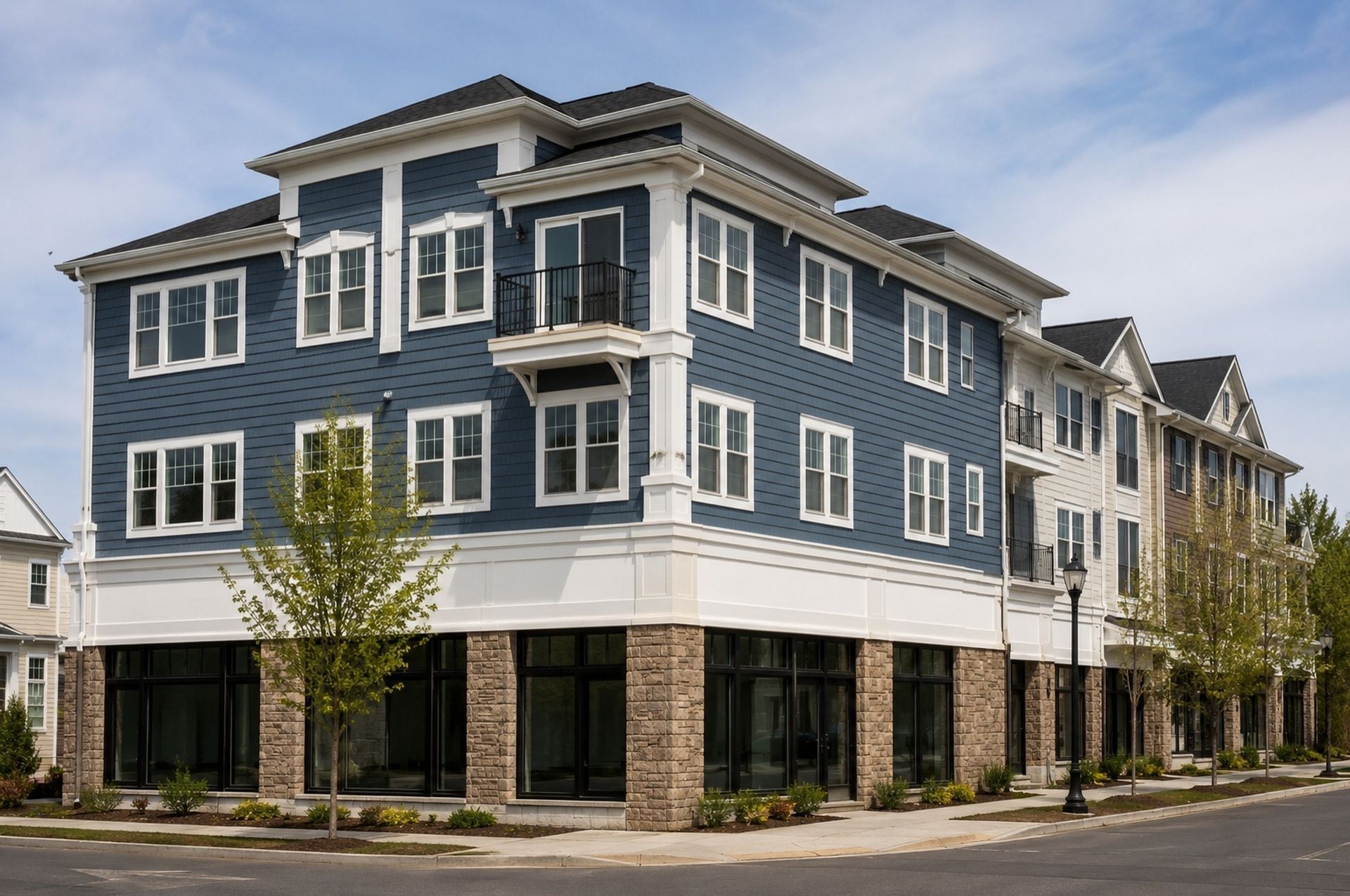
A three-story building in downtown New Haven with a bakery on the ground floor and two rental apartments above it does not fit neatly into any single insurance category. That tension between residential and commercial use is precisely what makes insuring mixed-use properties in Connecticut so complicated, and so critical to get right. The state has seen a
renewed push toward commercial-to-residential building conversions, which means more property owners are managing buildings that serve dual purposes. Small business owners in Connecticut pay an average of $108 per month for
commercial property coverage alone, and larger
mixed-use assets can run significantly higher depending on the risk profile. Getting the wrong policy, or worse, assuming a standard homeowners or commercial plan will cover everything, is one of the most expensive mistakes a property owner can make. This guide breaks down the specific coverage types, premium factors, and policy structures that matter most for owners of mixed-use buildings across the state.
Understanding Mixed-Use Insurance in Connecticut
Defining Mixed-Use Under CT State Law
Connecticut classifies a property as mixed-use when a single building contains both residential dwelling units and commercial or retail space. The most common configuration is a storefront or office on the ground floor with apartments on the upper levels, though variations exist throughout Hartford, Bridgeport, Stamford, and smaller towns. State zoning regulations, which vary by municipality, determine whether a building qualifies as mixed-use, and this classification directly affects what kind of insurance a carrier will write for the property.
The Connecticut Insurance Department, which issued updated guidance in mid-2026, treats mixed-use buildings differently from purely residential or purely commercial structures. Insurers must account for the liability exposure created by public-facing businesses, the habitability requirements for residential tenants, and the structural demands of housing both under one roof. A property that is 60% residential by square footage but generates 70% of its income from a ground-floor restaurant presents a fundamentally different risk than a building with a quiet accounting office below two apartments.
Why Standard Homeowners or Commercial Policies Often Fail
A standard homeowners policy is designed for owner-occupied single-family residences. It does not account for commercial foot traffic, business liability claims, or the income generated by retail tenants. On the other side, a purely commercial policy may exclude residential dwelling coverage, leaving apartment units and their occupants unprotected in a claim.
The gap is not theoretical. A common scenario involves a slip-and-fall injury in a ground-floor shop where the property owner carries only a residential policy. The insurer denies the claim because the injury occurred in a commercial space not covered under the policy terms. Conversely, a commercial-only policy might refuse to pay for water damage to a second-floor apartment because residential units were never listed on the declarations page. Mixed-use properties require a policy, or a combination of policies, specifically structured to address both exposures.
Essential Coverage Types for CT Property Owners
Commercial General Liability vs. Residential Liability
Commercial general liability, or CGL, covers bodily injury and property damage claims arising from business operations on the premises. If a customer trips on a wet floor in a ground-level retail space, CGL responds. Residential liability, by contrast, protects against claims made by tenants or their guests within the dwelling portions of the building, such as injuries from a broken staircase railing leading to a second-floor apartment.
Most Connecticut mixed-use property insurance policies bundle these two coverages, but the limits and sub-limits differ. A CGL policy for a building with a restaurant tenant should carry higher limits than one housing a small insurance brokerage, simply because food service operations generate more frequent and more severe claims. Property owners should request that both liability types appear on the same declarations page with clearly defined per-occurrence and aggregate limits.
Property Coverage for Structure and Contents
Structural coverage protects the building itself, including walls, roofing, plumbing, electrical systems, and any permanently installed fixtures. Contents coverage, often called business personal property coverage on the commercial side, protects movable assets like appliances, furniture, and equipment owned by the landlord and provided to tenants.
One detail that catches many Connecticut property owners off guard is the difference between replacement cost and actual cash value. Replacement cost pays to rebuild or repair the structure at current material and labor prices. Actual cash value deducts depreciation, which can leave a significant shortfall on older buildings. Given that commercial property insurance premiums have been trending upward nationally in 2026, selecting the right valuation method is a decision that directly affects both premium costs and claim payouts.
Loss of Rental Income Protection
If a covered event, such as a fire or burst pipe, makes part of the building uninhabitable or forces a commercial tenant to close temporarily, loss of rental income coverage replaces the revenue the owner would have received. This coverage is not automatic on every policy, and the limits must reflect the actual rental income the property generates.
For a mixed-use building in Hartford County where
multifamily and commercial rents have been climbing steadily, an inadequate rental income limit could mean months of mortgage payments with no offsetting insurance proceeds. Owners should calculate their total monthly rental income from both residential and commercial tenants, then set their coverage limit to sustain at least 12 months of lost revenue.
A basic mixed-use policy and a comprehensive one can look similar on the surface, but the differences in coverage breadth and claim response are substantial. The table below highlights the most critical distinctions.
Comparison Table: Standard vs. Extended Coverage Features
| Feature | Basic Policy | Comprehensive Policy |
|---|---|---|
| Commercial General Liability | $500K per occurrence | $1M+ per occurrence |
| Residential Liability | Often excluded or minimal | Included with separate limits |
| Property Valuation | Actual cash value | Replacement cost |
| Loss of Rental Income | 6-month cap | 12-month cap or higher |
| Flood Coverage | Not included | Available as endorsement |
| Equipment Breakdown | Not included | Included (boilers, HVAC, elevators) |
| Ordinance or Law Coverage | Not included | Covers cost to bring building up to current code after a loss |
| Tenant Discrimination Liability | Not included | Included |
The comprehensive option costs more, but for buildings with older infrastructure, high-value commercial tenants, or locations in flood-prone areas along the Connecticut coastline, the additional premium is a fraction of what a single uncovered claim could cost.
Building Age and Local Building Codes
Connecticut has some of the oldest building stock in the United States. A mixed-use property built in the 1920s with original knob-and-tube wiring, cast iron plumbing, and a coal-converted heating system presents a dramatically different risk than a 2020 construction with modern fire suppression and updated electrical panels. Insurers price this risk accordingly.
Local building codes also matter. If a fire destroys 40% of an older building, the municipality may require the entire structure to be brought up to current code during the rebuild. Without ordinance or law coverage, the property owner bears that cost out of pocket. The cautious optimism around Connecticut's 2026 development outlook has increased renovation activity, but it has also drawn insurer attention to code compliance gaps in aging mixed-use buildings.
The Nature of Your Commercial Tenants
Not all commercial tenants carry the same risk. A ground-floor yoga studio generates far fewer liability claims than a bar or a dry cleaner that uses chemical solvents. Insurers evaluate the type of business, its hours of operation, whether it serves alcohol, and whether it attracts significant foot traffic.
Property owners should require commercial tenants to carry their own general liability insurance and name the building owner as an additional insured on the tenant's policy. This creates a secondary layer of protection and can reduce the owner's own premium. Lease agreements should specify minimum coverage limits, typically $1 million per occurrence for most retail and service businesses in Connecticut.
Common Questions About Mixed-Use Coverage
FAQ: Do I need separate policies for the shop and the apartments?
Not necessarily. Many carriers offer a single mixed-use policy, sometimes called a businessowners policy with a residential endorsement, that covers both the commercial and residential portions. That said, some buildings with high-risk commercial tenants may require a standalone CGL policy layered on top of a residential landlord policy. An insurance broker familiar with Connecticut mixed-use property insurance can determine which structure offers the best protection at the lowest cost.
FAQ: What happens if my commercial tenant causes a fire?
If the tenant's negligence causes a fire that damages the building, the property owner's policy should cover the structural damage and loss of rental income. The insurer may then subrogate, meaning it pursues the tenant or the tenant's insurer for reimbursement. This is why requiring tenants to carry their own insurance is so important: it ensures there is a solvent party for the property insurer to recover from.
FAQ: Does CT law require me to have flood insurance?
Connecticut does not mandate flood insurance by state law. However, if the property is in a FEMA-designated Special Flood Hazard Area and carries a federally backed mortgage, the lender will require it. Coastal towns like Norwalk, Bridgeport, and Old Saybrook have significant flood zones. Even properties outside designated zones can flood, and standard property policies exclude flood damage entirely, so a separate National Flood Insurance Program policy or private flood policy is worth serious consideration.
FAQ: How does the 51% rule affect my insurance rates?
Many insurers use a threshold, often around 51%, to determine whether a mixed-use building is classified primarily as residential or primarily as commercial. If more than 51% of the building's square footage or revenue is commercial, the entire property may be rated on a commercial schedule, which typically carries higher premiums. Conversely, a building that is mostly residential may qualify for lower rates. Owners should understand how their insurer calculates this split and whether reclassifying a portion of the building could affect their premium.
Insuring a mixed-use property in Connecticut is not a matter of picking the cheapest quote from an online comparison tool. The interplay between commercial liability, residential coverage, building age, tenant risk, and local code requirements demands a policy tailored to the specific building and its uses.
Start by documenting the exact square footage dedicated to commercial versus residential use, the types of businesses operating on the premises, and the total monthly rental income from all tenants. Gather recent inspection reports, especially for electrical, plumbing, and fire suppression systems. Then work with an independent insurance broker who writes policies for mixed-use properties in Connecticut specifically, not a generalist who handles mostly auto or standard homeowners coverage.
The right Connecticut mixed-use property insurance policy protects not just the building itself but the income stream it generates, the tenants who depend on it, and the years of equity built into the investment. Getting it right the first time is far less expensive than discovering a coverage gap after a claim.
About The Author:
Anton Reed
As Managing Principal of Adion Financial Group, I’m committed to helping individuals and businesses achieve financial security through strategic insurance and planning solutions. My focus is on building trust, delivering clarity, and ensuring every client receives expert guidance backed by experience and integrity.
Contact Us
Personal INSURANCE Coverage
Comprehensive Coverage for Every Personal Need
Business Insurance Solutions
Professional Liability Coverage for Service-Based Businesses
General Liability Insurance
Protects businesses from lawsuits related to injuries and property damage.
INDUSTRIES WE SERVE
Specialized Coverage for Leading Connecticut Industries
Contractors
Insurance
Whether you’re a general contractor or a specialized tradesperson, we offer coverage that protects against job site risks, equipment damage, and liability claims.

Commercial Truck Insurance
Whether you operate a single truck or an entire fleet, we provide coverage for cargo, liability, and physical damage to keep your business moving.

Restaurant Business Insurance
Keep your restaurant, café, or bar protected with coverage for property damage, liquor liability, foodborne illness, and employee injuries.

Commercial Real Estate Insurance
Safeguard your commercial properties, rental units, and office spaces from property damage, liability claims, and tenant-related risks.

“I’ve been with AFG for years. Their service is second to none, and I always feel confident that I’m covered.”
Sarah K.
Real Stories.
Real Protection.
Real Trust.
See Why Businesses and Families Trust Us for Coverage.

Quick Answers to Your Insurance Questions
Frequently Asked Questions
about Adion Financial Group
Understanding Insurance Starts with the Right Information
1. What types of insurance do you offer?
At Adion Financial Group, we offer a wide range of insurance options designed to meet the needs of both individuals and businesses. For individuals, we provide coverage for personal auto, home, renters, life, and health insurance. Whether you're looking to protect your home, your car, or your loved ones, we have a solution tailored to your needs.
2. How do I get a quote for insurance?
Getting an insurance quote with Adion Financial Group is simple and fast. First, visit our website and fill out the quote request form, providing some basic information about the type of insurance you need. If you prefer a more personal touch, you can also contact us directly, and one of our agents will walk you through the process.
3. What should I do if I need to file a claim?
If you need to file a claim, the first step is to notify us immediately. You can either call our office or submit your claim online, depending on your preference. Once we receive your claim, our team will guide you through the necessary steps and help you gather the required information.
4. How can I change my coverage or update my policy?
Making changes to your coverage or updating your policy is easy with Adion Financial Group. Whether you're moving to a new home, adding a vehicle, or expanding your business, we can help you adjust your insurance to reflect your current needs.
5. Why should I choose an independent insurance agency?
Choosing an independent insurance agency like Adion Financial Group provides you with a distinct advantage: we work for you, not an insurance company. Our independent status allows us to shop around with multiple carriers to find the most competitive rates and the best coverage options for your unique situation.
6. How can I make sure I have the right amount of coverage?
Determining the right amount of coverage can be overwhelming, but our team at Adion Financial Group is here to help. The first step is assessing your personal or business assets and identifying the potential risks you face. Whether you're an individual looking to protect your home and car, or a business owner trying to safeguard your employees and property, we will walk you through the different coverage options.
Stay Informed on Insurance Trends and Tips
Insights & Tips to Keep You Informed

Contact Us
Phone
Locations
Connecticut Location
703 Hebron Ave., 3rd Floor, Glastonbury, CT 06033
North Carolina Location
436 East 36th St., Charlotte, NC 28205