
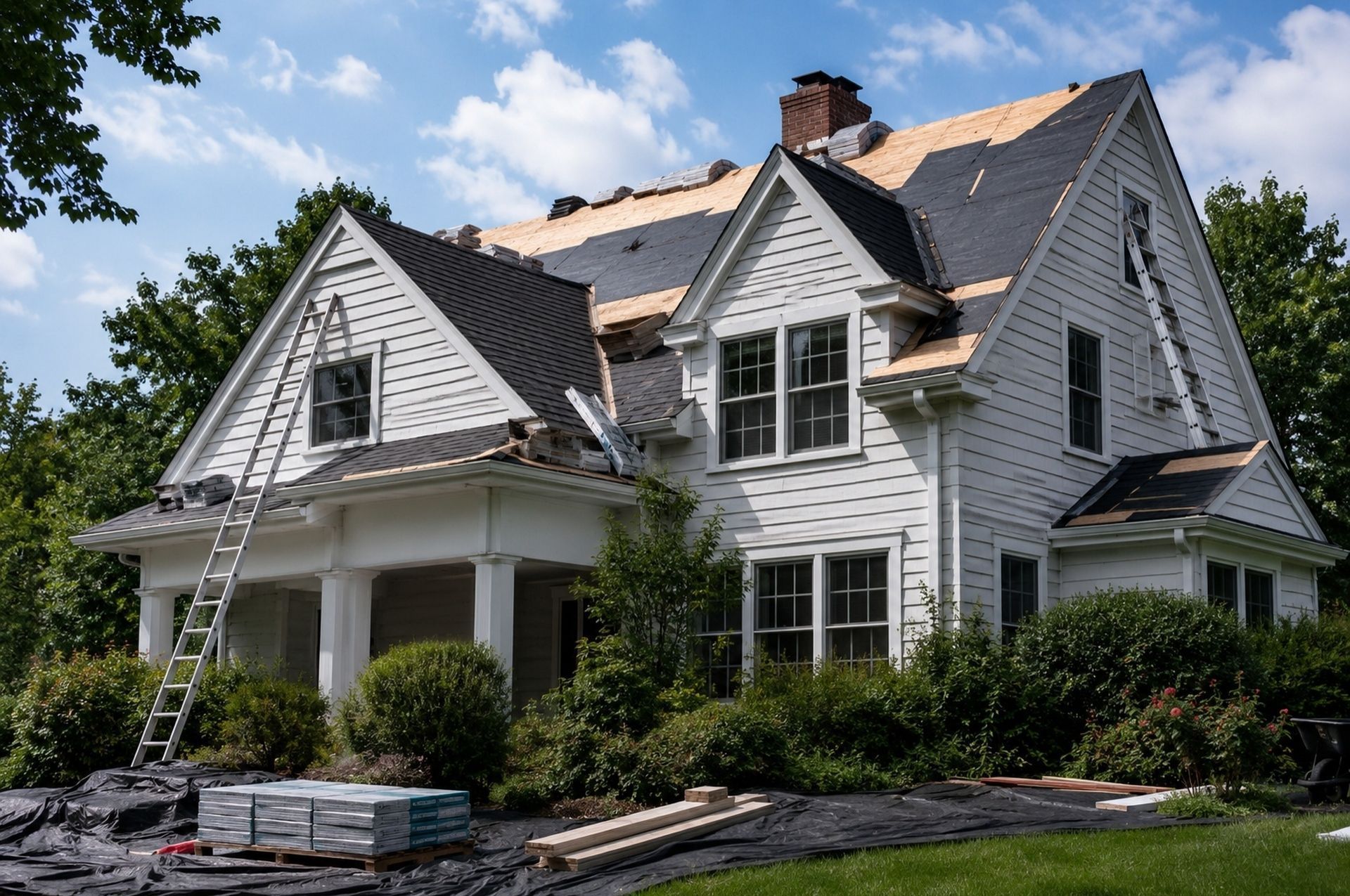
A single storm season in Connecticut can generate thousands of roofing claims, and contractors who respond to that demand face some of the highest liability exposure in the trades. Falls from elevation remain the leading cause of death in construction, and property damage from debris, torn shingles, and mishandled materials can produce six-figure lawsuits before a project is even finished.
Connecticut roofing contractor insurance is not simply a line item on a business plan; it is the financial barrier between a profitable operation and a catastrophe that closes the doors permanently. The state enforces specific licensing, bonding, and coverage mandates that go beyond what many neighboring states require, which means a policy package assembled for a New York or Massachusetts operation may leave dangerous gaps here. Annual general liability premiums for roofing contractors in Connecticut
typically range from $2,400 to $6,600, significantly higher than what
electricians or
plumbers pay, because the risk profile of roof work places it in one of the most expensive classification codes in the insurance industry. Understanding the required policies, how premiums are calculated, and where contractors commonly make coverage mistakes can save thousands of dollars and prevent devastating claim denials.
Essential Insurance Policies for Connecticut Roofers
Roofing operations carry a combination of risks that no single policy can address. A worker falls through decking, a ladder damages a client's siding, a company truck rear-ends a vehicle on I-95: each of these scenarios triggers a different coverage line. Connecticut contractors need a coordinated set of policies that work together without overlapping excessively or, worse, leaving blind spots. The three core pillars are general liability, workers' compensation, and commercial auto paired with inland marine coverage. Each one protects a different category of loss, and skipping any of them exposes the business to direct financial responsibility.
General Liability for Property Damage and Injuries
General liability is the policy most homeowners and general contractors will ask to see before allowing a roofer on site. It covers third-party bodily injury, property damage, and completed operations claims, meaning it responds both during and after the work is finished. A common scenario involves a shingle crew that accidentally damages a neighbor's fence or drops tools onto a parked car below. Without general liability, the roofing company pays that repair bill out of pocket.
Completed operations coverage, which is included within most general liability forms, is especially critical for roofers. If a roof installed in 2025 leaks during a 2026 nor'easter and ruins a homeowner's ceiling, the completed operations portion of the policy responds to that claim. Connecticut courts have consistently held contractors liable for defective workmanship even years after project completion, so maintaining this coverage without gaps is essential. Most insurers write general liability for roofers at $1 million per occurrence and $2 million aggregate, though larger commercial projects may demand higher limits.
Workers' Compensation Requirements in CT
Connecticut law requires every employer with one or more employees to carry workers' compensation insurance. There are no exemptions for small crews, seasonal help, or subcontractors who lack their own policies. If an uninsured subcontractor is injured on a job, the hiring contractor's workers' comp policy becomes responsible for the claim, which can result in premium surcharges and audit penalties.
The classification code for roofing, typically NCCI code 5551, carries one of the highest experience modification rates in construction. Premiums are calculated per $100 of payroll, and for Connecticut roofers, that rate often falls between $15 and $25 per $100 depending on the company's loss history. A five-person crew with a combined annual payroll of $250,000 could face workers' comp premiums exceeding $40,000. The state insurance department publishes guidance on roof-related risk classifications that every contractor should review before renewal season.
Commercial Auto and Inland Marine Coverage
Company trucks, trailers, and the equipment they carry represent a significant portion of a roofing contractor's total asset value. Commercial auto insurance covers liability and physical damage for vehicles used in business operations, including hired and non-owned auto endorsements for employees who occasionally drive personal vehicles on company errands. Connecticut requires minimum auto liability limits of 25/50/25, but most contractors carry at least $500,000 in combined single-limit coverage to satisfy general contractor and municipal project requirements.
Inland marine insurance protects tools, materials, and equipment while in transit or stored at job sites. A standard commercial property policy only covers items at the business's listed address, so nail guns, compressors, and bundled shingles sitting on a residential driveway overnight would not be covered without inland marine. Theft from job sites and vehicle break-ins account for a surprising number of claims in the roofing industry, making this coverage a practical necessity rather than an optional add-on.
Connecticut State Licensing and Bond Requirements
Connecticut requires roofing contractors to register with the Department of Consumer Protection and maintain a home improvement contractor license (HIC). This registration mandates a surety bond, currently set at $15,000, which protects consumers if a contractor fails to complete a project or violates state consumer protection statutes. The bond is not insurance; it is a financial guarantee that the contractor must repay if a claim is paid out against it.
Recent legislative activity has reshaped the insurance market for Connecticut contractors. HB 5373, passed in 2026, moves beyond the previous "diligent effort" standard for insurers, requiring them to provide clearer documentation when declining to write or renew policies for high-risk trades like roofing. This change directly affects how contractors shop for coverage and how quickly they can secure replacement policies after a non-renewal. The full fiscal analysis of HB 5263 outlines additional regulatory shifts affecting contractor bonding thresholds and insurance verification procedures.
Contractors who operate without proper licensing and bonding face fines up to $5,000 per violation, and homeowners can void contracts with unlicensed roofers without penalty. Maintaining active registration, a valid surety bond, and proof of insurance is not optional: it is the cost of doing business legally in Connecticut.
Comparing Standard vs. High-Risk Roofing Coverage
Not all roofing insurance policies are created equal. Standard market carriers, those with A.M. Best ratings of A- or higher, offer the most competitive premiums but are selective about which contractors they will insure. Companies with clean loss histories, established safety programs, and consistent revenue often qualify for standard coverage. Contractors with recent claims, new businesses with fewer than three years of history, or those performing steep-slope work above three stories may be pushed into the excess and surplus (E&S) market, where premiums can be 40 to 60 percent higher.
Comparison Table: Basic vs. Comprehensive Protection
| Coverage Feature | Basic (Standard Market) | Comprehensive (E&S or Enhanced) |
|---|---|---|
| General Liability Limit | $1M per occurrence / $2M aggregate | $2M per occurrence / $4M aggregate |
| Workers' Comp | Statutory minimums | Statutory + employer's liability $1M |
| Commercial Auto | 25/50/25 state minimum | $1M combined single limit |
| Inland Marine | Not included | $50,000 to $250,000 equipment coverage |
| Umbrella/Excess | Not included | $1M to $5M excess layer |
| Completed Operations | 1 year tail | 3 to 5 year extended tail |
| Typical Annual Cost | $8,000 to $15,000 | $18,000 to $40,000+ |
The
2026 roofing industry outlook highlights rising material costs and labor shortages as key factors pushing more contractors into higher-risk categories. Insurers view companies struggling with workforce stability as greater claim risks, which directly affects the type of market a contractor can access.
Insurance carriers assess roofing contractors using a combination of quantitative and qualitative factors. Revenue, payroll, years in business, geographic service area, and the types of roofing systems installed all feed into the underwriting model. A contractor generating $2 million in annual revenue will pay more than one generating $500,000, but the relationship is not strictly linear. Carriers also weigh the mix of residential versus commercial work, the height of structures serviced, and whether the contractor performs tear-offs or overlay installations.
Impact of Residential vs. Commercial Projects
Residential reroofing on single-family homes carries a different risk profile than commercial flat-roof installations on warehouses or retail centers. Residential work tends to involve more ladder use and steep-slope exposure, which increases fall risk. Commercial projects, on the other hand, often require hot-tar or torch-applied membrane systems that introduce fire hazards.
Contractors who perform both types of work may see their premiums split-rated, with each category assessed at its own rate per $100 of revenue or payroll. A company that derives 70 percent of its revenue from residential tear-offs and 30 percent from commercial TPO installations will be rated differently than a purely residential operation. Specializing in one area can sometimes reduce premiums, but only if the contractor's loss history supports the lower rate.
Claim History and Safety Records
Nothing influences roofing insurance premiums more than claim history. The experience modification rate, or EMR, is a numerical score assigned to each contractor based on past workers' compensation claims compared to the industry average. An EMR of 1.0 is average; anything below 1.0 earns premium credits, and anything above 1.0 triggers surcharges. A contractor with an EMR of 1.3 pays 30 percent more than the base rate, which on a $40,000 workers' comp premium translates to an extra $12,000 per year.
Documented safety programs, OSHA 10 or OSHA 30 certifications for crew members, and regular toolbox talks can all help reduce the EMR over time. Some carriers also offer premium discounts of 5 to 10 percent for contractors who implement fall protection plans that exceed OSHA minimums.
Connecticut-specific insurance requirements for contractors outline the minimum thresholds, but exceeding them often pays for itself through lower premiums.
Common Questions About Connecticut Roofing Insurance
Frequently Asked Questions
Does a sole proprietor without employees still need workers' compensation in Connecticut? Sole proprietors with no employees are generally exempt from the workers' comp mandate. That said, many general contractors and property managers require proof of workers' comp before allowing a subcontractor on site, so carrying a policy even without employees can open doors to more work.
Can a roofing contractor use a personal auto policy for business vehicles? No. Personal auto policies contain business-use exclusions that void coverage if a claim occurs during work-related driving. A commercial auto policy is required for any vehicle used to transport tools, materials, or crew members to job sites.
What happens if a subcontractor on my job does not have insurance? The hiring contractor becomes responsible for the uninsured sub's claims under Connecticut law. This applies to both workers' compensation and general liability. Always collect certificates of insurance before any subcontractor begins work.
How long does completed operations coverage last after a project is finished? Most standard policies provide completed operations coverage for the duration of the policy period. Extended tail endorsements can stretch this to three or five years, which is advisable for contractors who install roof systems with long warranties.
Is an umbrella policy necessary for a small roofing company?
An umbrella policy provides an extra layer of liability protection above the limits of general liability, commercial auto, and employer's liability. For roofing contractors, where a single fall or property damage claim can exceed $1 million, an umbrella policy costing $1,500 to $4,000 per year is a sound investment.
Before You Buy a Policy
Choosing the right insurance package for a Connecticut roofing operation requires more than collecting the cheapest quotes from an online marketplace. The recent regulatory changes in Connecticut's insurance market mean that carriers are adjusting how they underwrite roofing risks, and contractors who understand these shifts can position themselves for better rates and broader coverage.
Start by requesting loss runs from the current carrier, as these documents reveal the claim history that every new insurer will review. Pair that with an updated safety program and current OSHA certifications for all crew leads. Obtain at least three quotes from agents who specialize in construction trades, not general business insurance brokers who write the occasional contractor policy. Ask each agent to explain the completed operations tail, the inland marine sub-limits, and whether the workers' comp policy includes an EMR-reduction program.
Connecticut roofing contractor insurance is a significant annual expense, but it is also the foundation that allows a company to bid on larger projects, satisfy municipal contract requirements, and survive the claim that every roofer eventually faces. The right coverage, structured correctly, is not a cost: it is the price of staying in business.
About The Author:
Anton Reed
As Managing Principal of Adion Financial Group, I’m committed to helping individuals and businesses achieve financial security through strategic insurance and planning solutions. My focus is on building trust, delivering clarity, and ensuring every client receives expert guidance backed by experience and integrity.
Contact Us
Personal INSURANCE Coverage
Comprehensive Coverage for Every Personal Need
Business Insurance Solutions
Professional Liability Coverage for Service-Based Businesses
General Liability Insurance
Protects businesses from lawsuits related to injuries and property damage.
INDUSTRIES WE SERVE
Specialized Coverage for Leading Connecticut Industries
Contractors
Insurance
Whether you’re a general contractor or a specialized tradesperson, we offer coverage that protects against job site risks, equipment damage, and liability claims.

Commercial Truck Insurance
Whether you operate a single truck or an entire fleet, we provide coverage for cargo, liability, and physical damage to keep your business moving.

Restaurant Business Insurance
Keep your restaurant, café, or bar protected with coverage for property damage, liquor liability, foodborne illness, and employee injuries.

Commercial Real Estate Insurance
Safeguard your commercial properties, rental units, and office spaces from property damage, liability claims, and tenant-related risks.

“I’ve been with AFG for years. Their service is second to none, and I always feel confident that I’m covered.”
Sarah K.
Real Stories.
Real Protection.
Real Trust.
See Why Businesses and Families Trust Us for Coverage.

Quick Answers to Your Insurance Questions
Frequently Asked Questions
about Adion Financial Group
Understanding Insurance Starts with the Right Information
1. What types of insurance do you offer?
At Adion Financial Group, we offer a wide range of insurance options designed to meet the needs of both individuals and businesses. For individuals, we provide coverage for personal auto, home, renters, life, and health insurance. Whether you're looking to protect your home, your car, or your loved ones, we have a solution tailored to your needs.
2. How do I get a quote for insurance?
Getting an insurance quote with Adion Financial Group is simple and fast. First, visit our website and fill out the quote request form, providing some basic information about the type of insurance you need. If you prefer a more personal touch, you can also contact us directly, and one of our agents will walk you through the process.
3. What should I do if I need to file a claim?
If you need to file a claim, the first step is to notify us immediately. You can either call our office or submit your claim online, depending on your preference. Once we receive your claim, our team will guide you through the necessary steps and help you gather the required information.
4. How can I change my coverage or update my policy?
Making changes to your coverage or updating your policy is easy with Adion Financial Group. Whether you're moving to a new home, adding a vehicle, or expanding your business, we can help you adjust your insurance to reflect your current needs.
5. Why should I choose an independent insurance agency?
Choosing an independent insurance agency like Adion Financial Group provides you with a distinct advantage: we work for you, not an insurance company. Our independent status allows us to shop around with multiple carriers to find the most competitive rates and the best coverage options for your unique situation.
6. How can I make sure I have the right amount of coverage?
Determining the right amount of coverage can be overwhelming, but our team at Adion Financial Group is here to help. The first step is assessing your personal or business assets and identifying the potential risks you face. Whether you're an individual looking to protect your home and car, or a business owner trying to safeguard your employees and property, we will walk you through the different coverage options.
Stay Informed on Insurance Trends and Tips
Insights & Tips to Keep You Informed

Contact Us
Phone
Locations
Connecticut Location
703 Hebron Ave., 3rd Floor, Glastonbury, CT 06033
North Carolina Location
436 East 36th St., Charlotte, NC 28205