

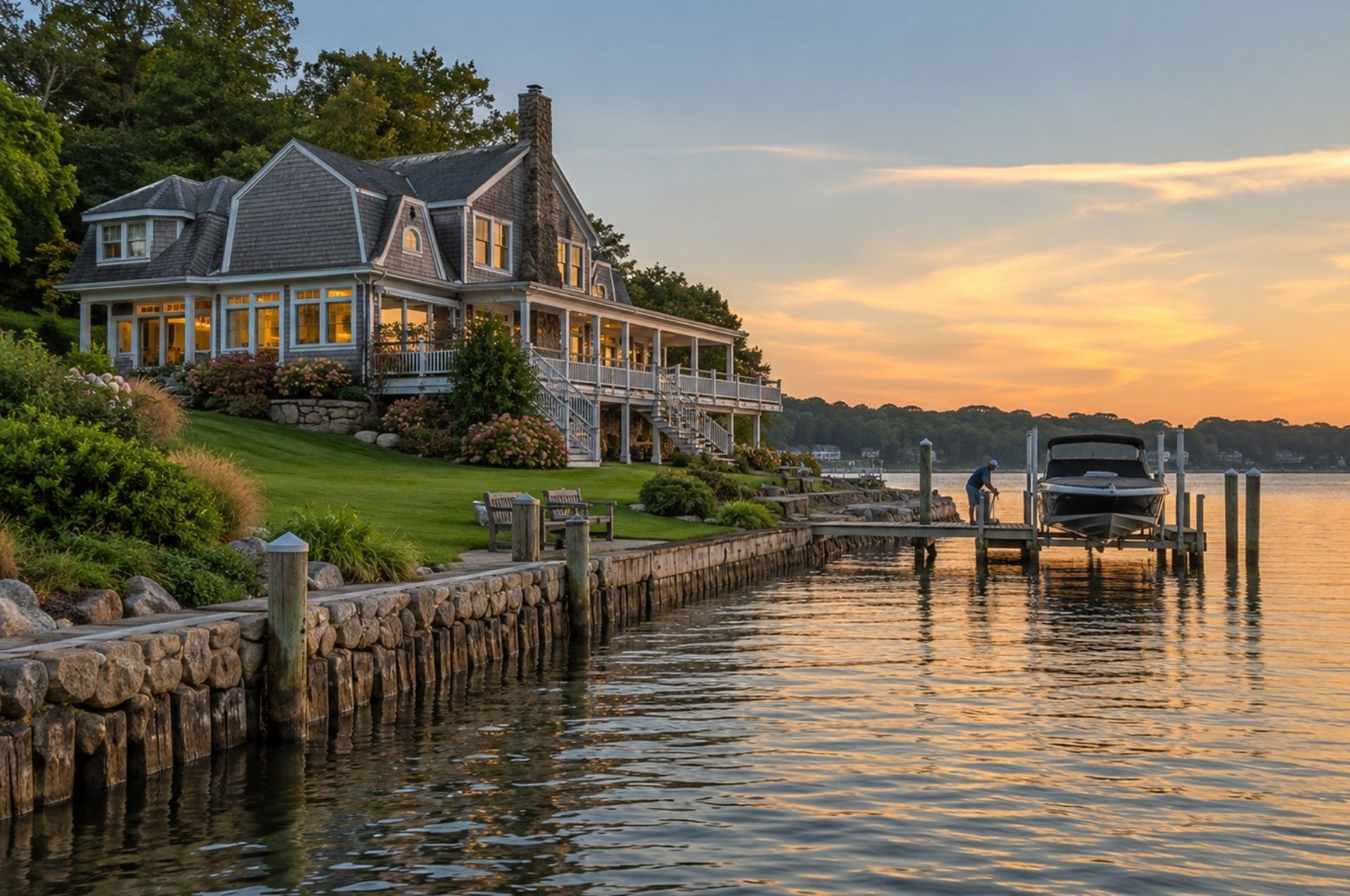
Owning a home along Connecticut's 96-mile shoreline carries a set of financial responsibilities that most inland homeowners never encounter. Storm surge, tidal flooding, and hurricane-force winds create an insurance environment where standard policies fall short, and premiums can climb well beyond what buyers initially expect. Coastal premiums in communities like Westbrook Center have reached an average of $3,866 annually, nearly double the statewide average of roughly $1,873. That gap reflects real risk, not arbitrary pricing. For anyone who owns or plans to purchase waterfront property in Connecticut, understanding how insurance works in these high-exposure zones is not optional. It is the difference between confident ownership and a devastating financial surprise after the next nor'easter or tropical system makes landfall. This guide breaks down the coverage structures, state programs, and cost-reduction strategies that matter most for shoreline homeowners in 2026.
Understanding Connecticut Coastal Insurance Risks
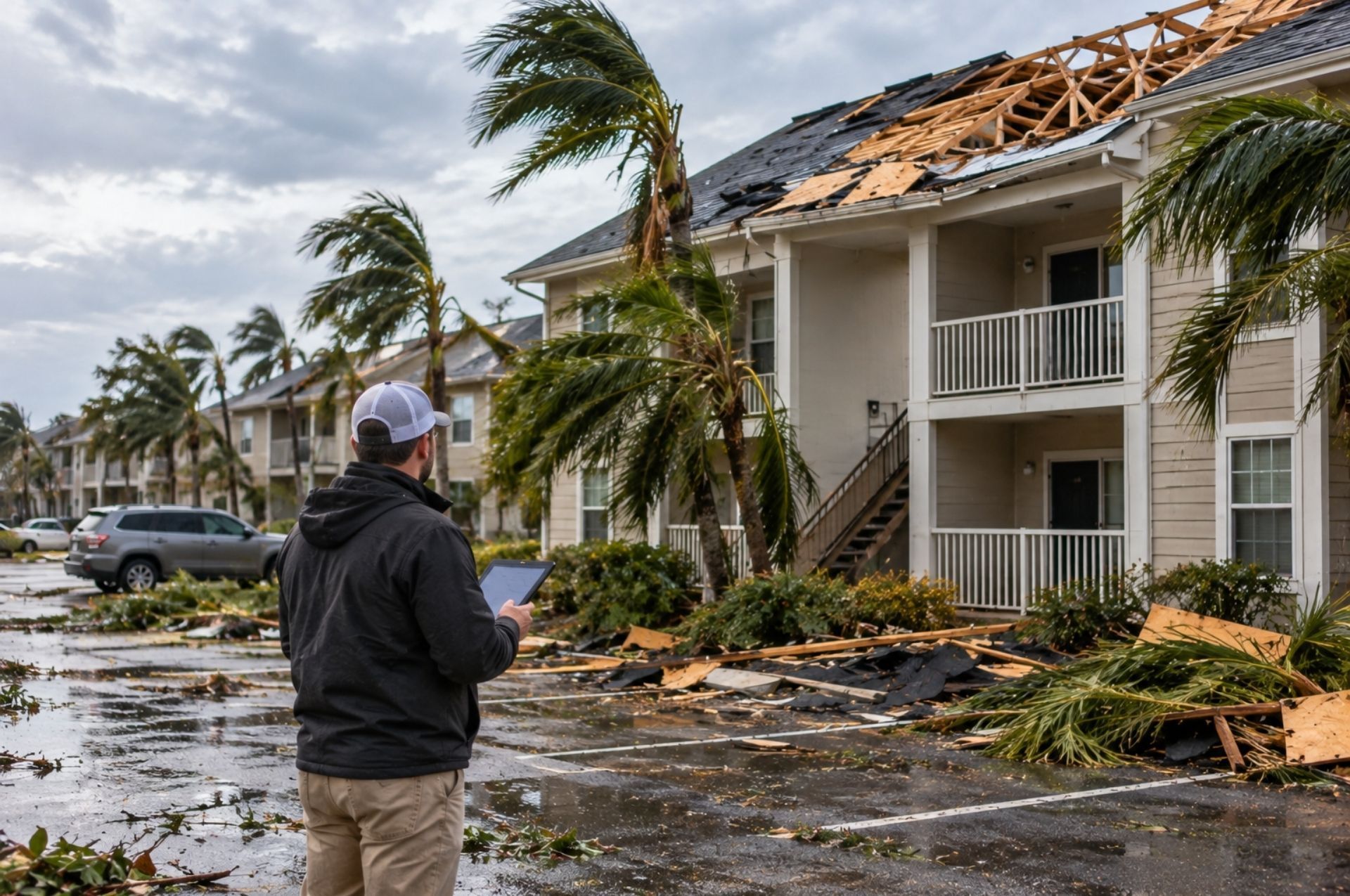
Connecticut sits at the intersection of two major weather threats: Atlantic hurricanes tracking up the Eastern Seaboard and powerful nor'easters that can produce sustained winds above 70 mph. The state's Long Island Sound coastline, stretching from Greenwich to Stonington, is particularly vulnerable to storm surge because the Sound acts as a funnel, amplifying water levels during westerly and southwesterly storms. Properties within a few hundred feet of the water face compounding risks: wind damage to roofs and siding, wave action against foundations, and saltwater intrusion that corrodes mechanical systems over time.
Hurricane and Windstorm Deductibles
Most coastal homeowners policies in Connecticut include a separate windstorm or hurricane deductible that operates differently from the standard deductible. Rather than a flat dollar amount, this deductible is typically calculated as a percentage of the dwelling coverage, usually between 2% and 5%. On a home insured for $600,000, a 5% hurricane deductible means the homeowner is responsible for the first $30,000 of wind-related damage before the policy pays anything. This structure catches many first-time coastal buyers off guard, especially those relocating from inland areas where a $1,000 or $2,500 flat deductible is the norm.
The Connecticut Insurance Department has issued guidance on how carriers must define triggering events for these percentage-based deductibles, typically requiring a named storm declaration from the National Hurricane Center. Understanding exactly when the higher deductible kicks in, and when a standard deductible applies, is essential before signing any policy.
Flood Zones and Elevation Requirements
Flood insurance operates on an entirely separate policy from homeowners coverage, a distinction that surprises many buyers. FEMA flood maps determine whether a property sits in a Special Flood Hazard Area (zones starting with A or V), and lenders require flood insurance for any federally backed mortgage in those zones. Connecticut's flood maps have been undergoing significant revisions, and many properties that were previously in moderate-risk zones have been reclassified into higher-risk designations under FEMA's Risk Rating 2.0 methodology.
Elevation certificates play a critical role in determining premiums. A home with a first-floor elevation even one foot above the Base Flood Elevation can save thousands annually compared to a similar home sitting at or below that benchmark. Properties in V zones, where wave action is expected during a 100-year flood, face the steepest rates and the most restrictive building requirements.
Key Coverage Components for Waterfront Properties
Insurance for waterfront homes in Connecticut requires layering multiple policies and endorsements to close the gaps that a standard HO-3 policy leaves open. Wind, flood, and water damage from different sources each fall under different coverage mechanisms, and failing to coordinate them properly creates dangerous blind spots.
Comparing Standard Homeowners vs. Coastal Policies
| Feature | Standard HO-3 Policy | Coastal/Waterfront Policy |
|---|---|---|
| Wind/Hurricane Deductible | Flat dollar amount ($1,000-$2,500) | Percentage-based (2%-5% of dwelling value) |
| Flood Coverage | Not included | Not included (separate NFIP or private policy required) |
| Storm Surge | Excluded | Excluded from wind policy; covered under flood policy |
| Water Backup | Optional endorsement | Optional endorsement (often essential) |
| Replacement Cost Basis | Standard | May require extended replacement cost due to post-storm demand surge |
| Replacement Cost Basis | Standard | May require extended replacement cost due to post-storm demand surge |
The most dangerous assumption a coastal homeowner can make is that "water damage" coverage on a homeowners policy includes flooding. It does not. Homeowners policies cover sudden internal water events like burst pipes, while rising water from storms requires a dedicated flood policy.
Protection for Docks, Piers, and Seawalls
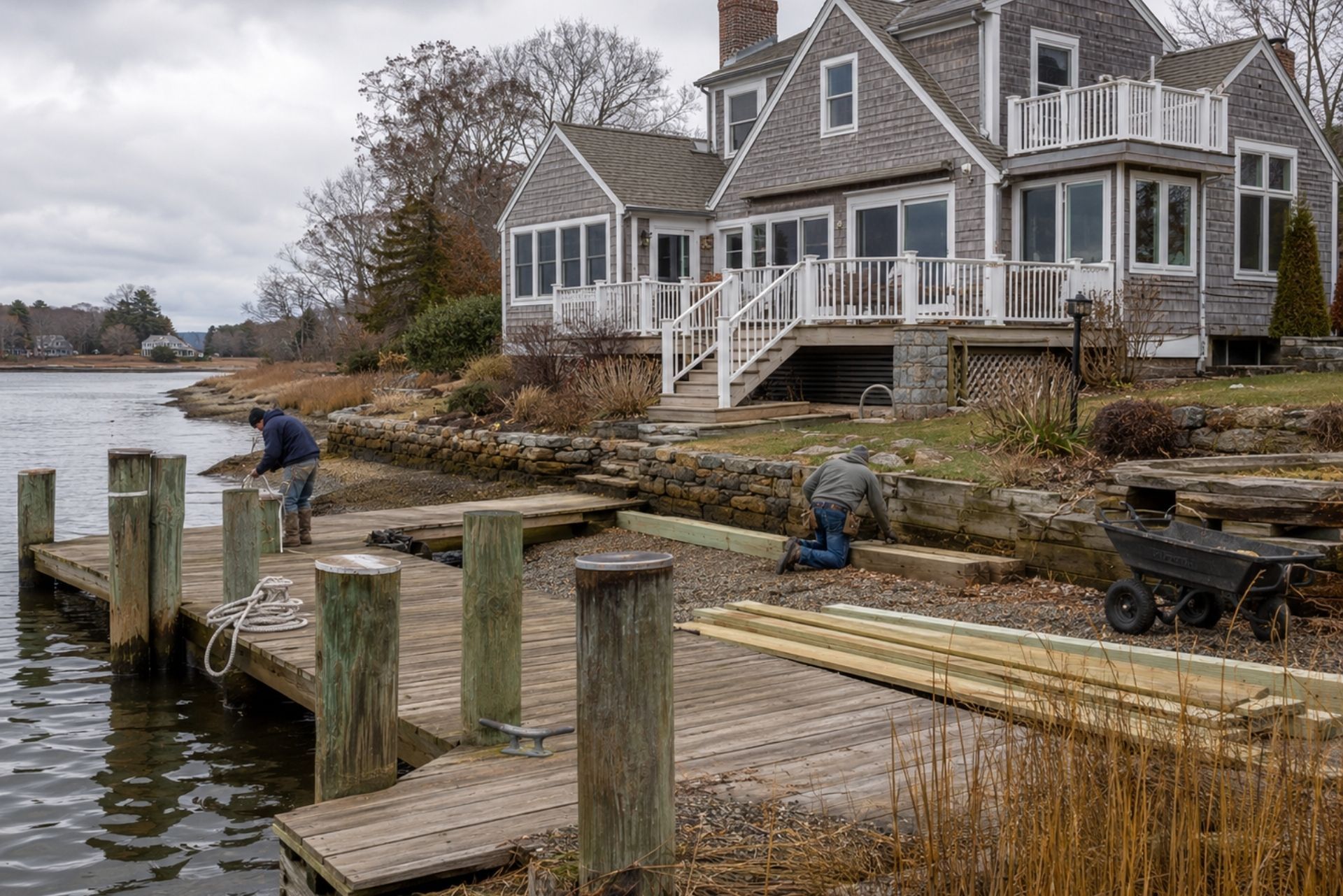
Standard homeowners policies treat docks, piers, boathouses, and seawalls as "other structures," but coverage limits are often capped at 10% of the dwelling amount. For waterfront properties where a private dock or seawall represents a $50,000 to $200,000 investment, that default limit may be insufficient. Separate scheduled coverage or an increased other-structures endorsement is typically necessary.
Seawalls present a particular challenge because insurers often classify storm damage to them as flood-related rather than wind-related, which means the homeowners policy will not respond. The flood policy may offer limited coverage for these structures, but it is rarely enough to fund a full rebuild. Property owners should obtain specific written confirmation from their carrier about what is and is not covered for each waterfront structure.
Standard Policy vs. Coastal Endorsements
A standard homeowners policy serves as the foundation, but coastal endorsements are what make it functional for shoreline living. Common endorsements include increased hurricane deductible buydowns (which lower the percentage-based deductible in exchange for higher premiums), ordinance or law coverage (critical when post-storm rebuilds must meet updated building codes), and loss-of-use extensions that account for the longer reconstruction timelines typical after widespread coastal storm events.
One endorsement that often gets overlooked is equipment breakdown coverage. Saltwater environments accelerate corrosion on HVAC systems, water heaters, and electrical panels, and standard policies exclude mechanical failure. A separate equipment breakdown endorsement fills this gap for a relatively modest additional premium, typically $50 to $150 per year.
Regional Risk Profiles Along the Connecticut Shoreline
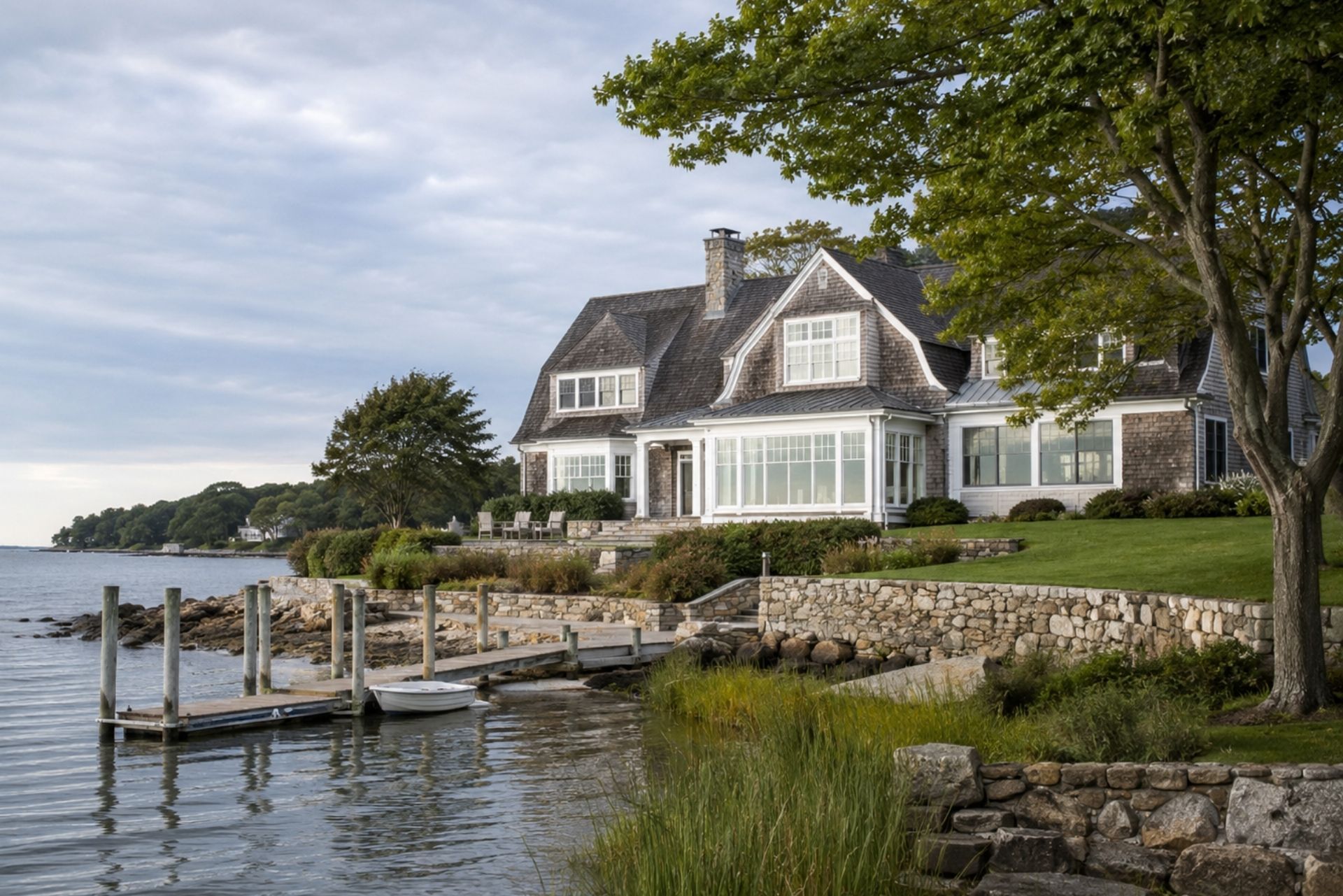
Insurance costs and risk exposure vary significantly along Connecticut's coast. Properties in Fairfield County towns like Norwalk, Westport, and Fairfield tend to carry higher dwelling values, which inflates both premiums and percentage-based deductibles. The stretch from Branford through Old Saybrook along the central coast sees some of the highest storm surge projections, with FEMA models estimating 8 to 12 feet of surge in a Category 2 hurricane scenario.
Eastern shoreline towns like Old Lyme, Waterford, and Groton face somewhat lower surge risk but remain highly exposed to nor'easter wind damage. Inland properties near rivers and tidal estuaries, even those several miles from the Sound, can fall into flood zones. The reality is that
proximity to the coastline is not the only factor that determines flood exposure in Connecticut.
The Connecticut FAIR Plan exists as an insurer of last resort for property owners who cannot obtain coverage through the voluntary market. It provides basic fire and wind coverage, but the policies are intentionally limited in scope and do not include liability, theft, or many other standard homeowners coverages. Homeowners who rely on the FAIR Plan typically need a separate "difference in conditions" policy to fill the gaps.
The private flood insurance market has expanded considerably in recent years, and several carriers now offer policies that exceed NFIP limits (which cap at $250,000 for dwelling coverage and $100,000 for contents). Private flood policies can also offer replacement cost valuation rather than the NFIP's actual cash value approach, which can mean tens of thousands of dollars more in a claim payout. The Connecticut Insurance Department has been actively encouraging competition in this space to give coastal homeowners more options.
Common Questions About Connecticut Shoreline Insurance
Homeowners along the Connecticut coast frequently ask whether they can bundle wind and flood into a single policy. The short answer is no: wind coverage comes through the homeowners or FAIR Plan policy, while flood coverage requires a separate NFIP or private flood policy. This two-policy structure is standard across all coastal states and is unlikely to change.
Another common question involves whether condo owners in shoreline buildings need individual flood policies. They do. The condo association's master policy may cover the building structure, but individual unit owners need their own flood policy for interior finishes, personal property, and improvements. This gap catches condo owners off guard after storm events with alarming regularity.
Fortified Roofing and Mitigation Discounts
Connecticut has taken concrete steps to reduce coastal property losses through building standards. The state's 2026 initiative promoting FORTIFIED roofing standards encourages homeowners to install wind-resistant roofing systems that meet Insurance Institute for Business and Home Safety (IBHS) specifications. Homes with FORTIFIED-designated roofs can qualify for insurance discounts ranging from 5% to 25% on wind premiums, depending on the carrier and the level of certification achieved.
Other mitigation measures that commonly reduce premiums include impact-resistant windows and doors, reinforced garage doors, secondary water barriers on roof decks, and hurricane straps connecting the roof structure to wall framing. Documenting these improvements with photos, receipts, and inspection reports gives homeowners bargaining power when shopping for coastal coverage.
Frequently Asked Questions
Do I need flood insurance if my Connecticut home is not in a FEMA flood zone? Flood damage can occur outside designated flood zones, and roughly 25% of NFIP claims come from properties in moderate- or low-risk areas. A policy is strongly recommended even if not required by a lender.
How much does waterfront home insurance cost in Connecticut? Premiums vary widely based on location, construction, and elevation. Shoreline communities average $3,500 to $5,000 annually for wind coverage alone, with flood insurance adding $1,000 to $4,000 or more depending on the zone and elevation.
Can I reduce my hurricane deductible? Yes. Many carriers offer deductible buydown endorsements that lower the percentage-based hurricane deductible, though the additional premium cost can be significant.
Does homeowners insurance cover storm surge damage? No. Storm surge is classified as flooding and requires a separate flood insurance policy. This is one of the most common and costly misunderstandings among coastal property owners.
What happens if my carrier stops writing policies in my area?
The Connecticut FAIR Plan provides basic coverage as a last resort, though it is more limited and often more expensive than voluntary market options. Working with an independent agent who represents multiple carriers helps ensure continuity.
Reducing the cost of insuring a Connecticut waterfront home requires a strategic approach rather than simply raising deductibles and hoping for the best. Start with a current elevation certificate, as even minor surveying updates can reflect improvements that lower flood premiums. Bundle non-flood policies with a single carrier for multi-policy discounts. Request a wind mitigation inspection to document existing protective features that many carriers will credit.
Comparing quotes from at least three carriers, including both admitted and surplus lines markets, often reveals significant pricing differences for identical coverage. An independent agent with specific coastal experience can access markets that direct-to-consumer carriers cannot, which is particularly valuable for high-value waterfront properties.
The insurance cost of a waterfront property should be evaluated before making an offer, not after closing. Request a CLUE report on the property to review its claims history, obtain preliminary insurance quotes based on the property address and construction details, and verify the current FEMA flood zone designation. Properties with recent claims or those sitting in V zones may carry insurance costs that fundamentally change the economics of ownership.
Buyers should also investigate whether the municipality participates in FEMA's Community Rating System, which can provide flood insurance discounts of 5% to 45% based on the town's floodplain management efforts. Towns like Westport and Old Saybrook have earned CRS credits that benefit every policyholder within their boundaries.
Making the Right Choice for Your Shoreline Home
Protecting a Connecticut coastal or waterfront home demands more than a single policy and a handshake. It requires a coordinated insurance strategy that accounts for wind, flood, surge, and the unique exposures that come with saltwater proximity. The gap between standard inland coverage and what shoreline properties actually need is wide, and the financial consequences of getting it wrong show up only after a storm, when it is too late to fix.
Work with an independent agent who specializes in coastal properties, obtain current elevation certificates and wind mitigation inspections, and review policies annually as flood maps and carrier appetites continue to shift. The right combination of coverage, mitigation investments, and carrier selection can make waterfront living in Connecticut both financially sustainable and genuinely secure for the long term.
About The Author:
Anton Reed
As Managing Principal of Adion Financial Group, I’m committed to helping individuals and businesses achieve financial security through strategic insurance and planning solutions. My focus is on building trust, delivering clarity, and ensuring every client receives expert guidance backed by experience and integrity.
Contact Us
Personal INSURANCE Coverage
Comprehensive Coverage for Every Personal Need
Business Insurance Solutions
Professional Liability Coverage for Service-Based Businesses
General Liability Insurance
Protects businesses from lawsuits related to injuries and property damage.
INDUSTRIES WE SERVE
Specialized Coverage for Leading Connecticut Industries
Contractors
Insurance
Whether you’re a general contractor or a specialized tradesperson, we offer coverage that protects against job site risks, equipment damage, and liability claims.

Commercial Truck Insurance
Whether you operate a single truck or an entire fleet, we provide coverage for cargo, liability, and physical damage to keep your business moving.

Restaurant Business Insurance
Keep your restaurant, café, or bar protected with coverage for property damage, liquor liability, foodborne illness, and employee injuries.

Commercial Real Estate Insurance
Safeguard your commercial properties, rental units, and office spaces from property damage, liability claims, and tenant-related risks.

“I’ve been with AFG for years. Their service is second to none, and I always feel confident that I’m covered.”
Sarah K.
Real Stories.
Real Protection.
Real Trust.
See Why Businesses and Families Trust Us for Coverage.

Quick Answers to Your Insurance Questions
Frequently Asked Questions
about Adion Financial Group
Understanding Insurance Starts with the Right Information
1. What types of insurance do you offer?
At Adion Financial Group, we offer a wide range of insurance options designed to meet the needs of both individuals and businesses. For individuals, we provide coverage for personal auto, home, renters, life, and health insurance. Whether you're looking to protect your home, your car, or your loved ones, we have a solution tailored to your needs.
2. How do I get a quote for insurance?
Getting an insurance quote with Adion Financial Group is simple and fast. First, visit our website and fill out the quote request form, providing some basic information about the type of insurance you need. If you prefer a more personal touch, you can also contact us directly, and one of our agents will walk you through the process.
3. What should I do if I need to file a claim?
If you need to file a claim, the first step is to notify us immediately. You can either call our office or submit your claim online, depending on your preference. Once we receive your claim, our team will guide you through the necessary steps and help you gather the required information.
4. How can I change my coverage or update my policy?
Making changes to your coverage or updating your policy is easy with Adion Financial Group. Whether you're moving to a new home, adding a vehicle, or expanding your business, we can help you adjust your insurance to reflect your current needs.
5. Why should I choose an independent insurance agency?
Choosing an independent insurance agency like Adion Financial Group provides you with a distinct advantage: we work for you, not an insurance company. Our independent status allows us to shop around with multiple carriers to find the most competitive rates and the best coverage options for your unique situation.
6. How can I make sure I have the right amount of coverage?
Determining the right amount of coverage can be overwhelming, but our team at Adion Financial Group is here to help. The first step is assessing your personal or business assets and identifying the potential risks you face. Whether you're an individual looking to protect your home and car, or a business owner trying to safeguard your employees and property, we will walk you through the different coverage options.
Stay Informed on Insurance Trends and Tips
Insights & Tips to Keep You Informed


Contact Us
Phone
Locations
Connecticut Location
703 Hebron Ave., 3rd Floor, Glastonbury, CT 06033
North Carolina Location
436 East 36th St., Charlotte, NC 28205