Connecticut Basement Waterproofing Contractor Insurance

or call us: (888) 585-5188
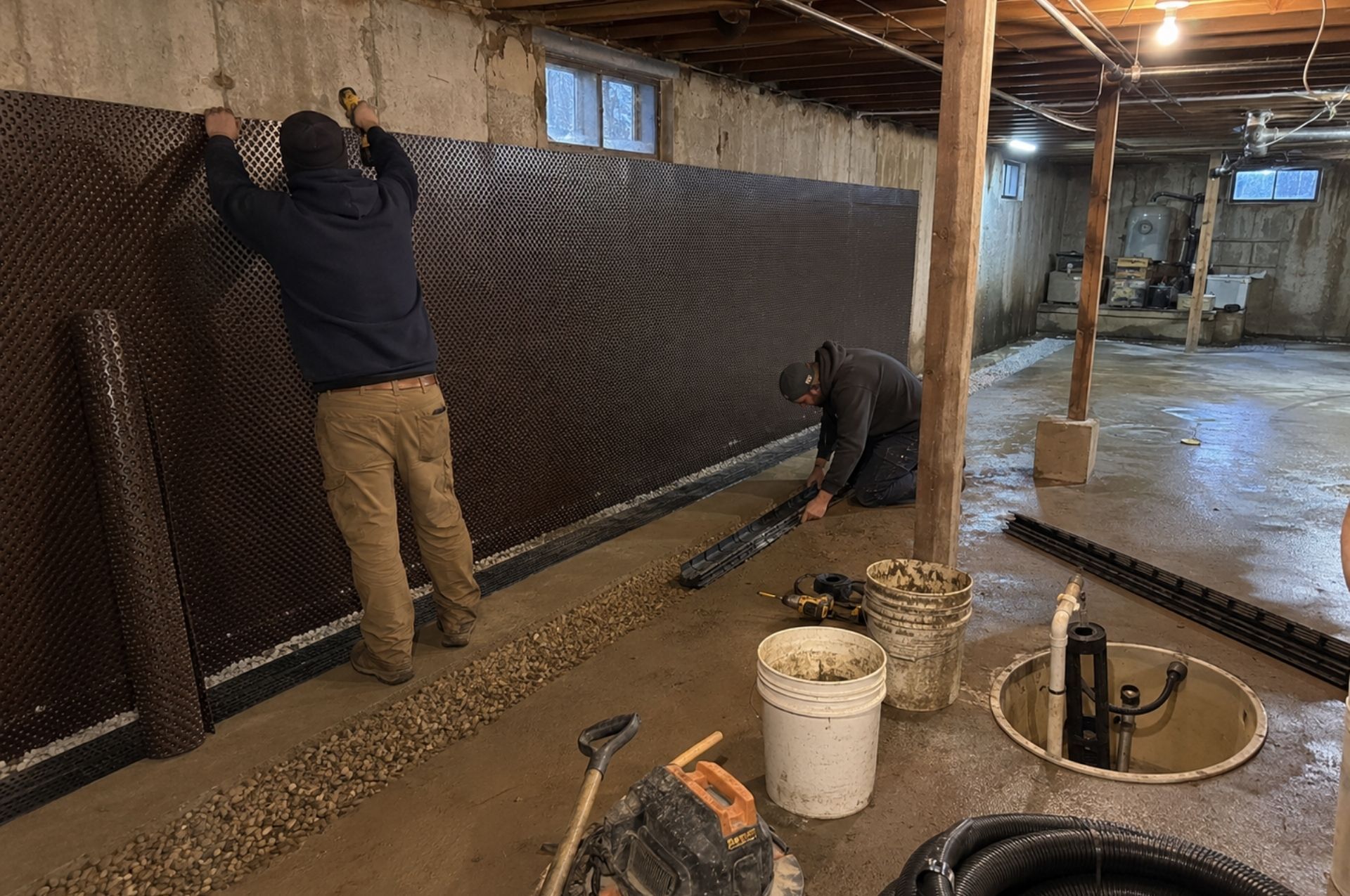
A basement waterproofing contractor working in Connecticut faces a risk profile that few other trades share. Water intrusion, foundation instability, mold liability, and excavation hazards all converge in a single project scope, and the insurance needs that result are anything but standard. Contractors who carry only a basic general liability policy often discover the hard way that their coverage has gaps large enough to sink a business. The state itself imposes strict registration and bonding requirements on home improvement contractors, making proper insurance not just a smart business decision but a legal necessity. Whether a company operates a single crew in Fairfield County or runs multiple teams across the Hartford metro area, understanding the right mix of policies is essential for long-term survival. This guide breaks down the specific coverage types, costs, and compliance rules that apply to waterproofing contractors operating in Connecticut in 2026, so that business owners can make informed decisions and avoid costly mistakes.
Why Connecticut Basement Waterproofing Contractors Need Specific Coverage
Waterproofing is not a standard remodeling job. The work involves direct contact with a home's structural foundation, often below grade, in conditions where hidden hazards like radon, deteriorated drainage tile, and unstable soils can turn a routine repair into a major liability event. A failed interior drainage system or improperly applied membrane can lead to tens of thousands of dollars in property damage, and the contractor who performed the work is the first party a homeowner's attorney will pursue. Standard contractor insurance policies are often written with general trades in mind, and they may exclude or limit coverage for water-related damage, subsurface work, or completed operations claims that surface months after the job is done.
Risks Unique to New England Foundations
Connecticut's geology and climate create a specific set of challenges for waterproofing contractors. Fieldstone and rubble foundations are common in homes built before the mid-twentieth century, and these structures behave very differently than poured concrete when subjected to hydrostatic pressure or frost heave. The state's freeze-thaw cycles, combined with a high water table in many coastal and river valley communities, mean that waterproofing failures can manifest quickly and cause significant secondary damage, including mold growth, structural shifting, and electrical hazards. A contractor who works on these older foundations needs a policy that explicitly covers completed operations, because a claim may not arise until the following spring when snowmelt reveals a failed repair.
Legal Requirements for CT Home Improvement Contractors
Connecticut regulates home improvement contractors through its Home Improvement Contractor (HIC) registration system. As of 2026, contractors must
post a $15,000 surety bond to maintain an active registration. This bond protects consumers, not the contractor, so it does not replace the need for liability or workers' compensation insurance. The state's Department of Consumer Protection enforces these requirements, and operating without a valid HIC registration can result in fines, loss of lien rights, and even criminal penalties. Contractors should also be aware that
recent legislative efforts have aimed to strengthen consumer protections tied to the HIC system, which may increase bonding or insurance requirements in the near future.
Essential Insurance Policies for Waterproofing Businesses
A single policy rarely covers every exposure a waterproofing contractor faces. The right insurance program is typically built from several distinct policies, each addressing a different category of risk. Skipping any one of these can leave a business exposed to a claim that wipes out years of profit.
General Liability and Property Damage
General liability (GL) is the foundation of any contractor's insurance program. It covers third-party bodily injury and property damage claims, including damage to a customer's home caused during or after the work. For waterproofing contractors, the critical detail is whether the policy includes completed operations coverage, which responds to claims arising after the project is finished. A standard GL policy for a waterproofing contractor typically carries limits of $1 million per occurrence and $2 million aggregate, though higher limits are available and often advisable for contractors working on high-value residential properties.
Workers' Compensation in Connecticut
Connecticut law requires any employer with one or more employees to carry workers' compensation insurance. There are no exceptions for small crews or part-time workers. Waterproofing work is classified as a high-risk trade due to the physical demands of excavation, confined space entry, and heavy equipment operation. Workers' comp premiums for this classification tend to run higher than those for general remodeling contractors, often falling between $8 and $15 per $100 of payroll depending on the company's claims history and experience modification rate. Failing to carry workers' comp in Connecticut can result in a fine of up to $50,000, and the business owner becomes personally liable for all medical costs and lost wages if a worker is injured.
Professional Liability and Errors & Omissions
Professional liability, sometimes called errors and omissions (E&O) coverage, protects against claims that arise from faulty design recommendations, incorrect system specifications, or inadequate site assessments. This is particularly relevant for waterproofing contractors who provide
consulting services, write drainage plans, or recommend specific products. If a contractor specifies an interior drainage system that proves inadequate for the site's hydrostatic conditions, the resulting damage claim may fall under professional liability rather than general liability. Not every insurer offers E&O coverage for waterproofing trades, so contractors may need to work with a specialty broker.
Comparison: Standard vs. Specialized Waterproofing Coverage
The difference between a generic contractor policy and one designed for waterproofing work can be significant. The table below highlights key distinctions.
| Coverage Feature | Standard Contractor Policy | Specialized Waterproofing Policy |
|---|---|---|
| Completed Operations | Often limited or excluded | Included with extended reporting |
| Water Damage Liability | May exclude below-grade water claims | Covers water intrusion and related damage |
| Mold Coverage | Typically excluded or sublimited | Available as endorsement, often $25K-$100K |
| Professional Liability | Not included | Available as add-on or bundled |
| Equipment Floater | Basic tools only | Covers sump pumps, dehumidifiers, cameras |
| Pollution Liability | Excluded | Available for radon, fuel spills, sealant fumes |
A contractor carrying only a standard policy may find that the most common claims in waterproofing work, such as water damage to finished basements or mold growth following a failed repair, fall outside the policy's coverage. Specialized policies cost more, but the premium difference is modest compared to the cost of defending even a single uninsured claim.
Protecting Your Equipment and Mobile Assets
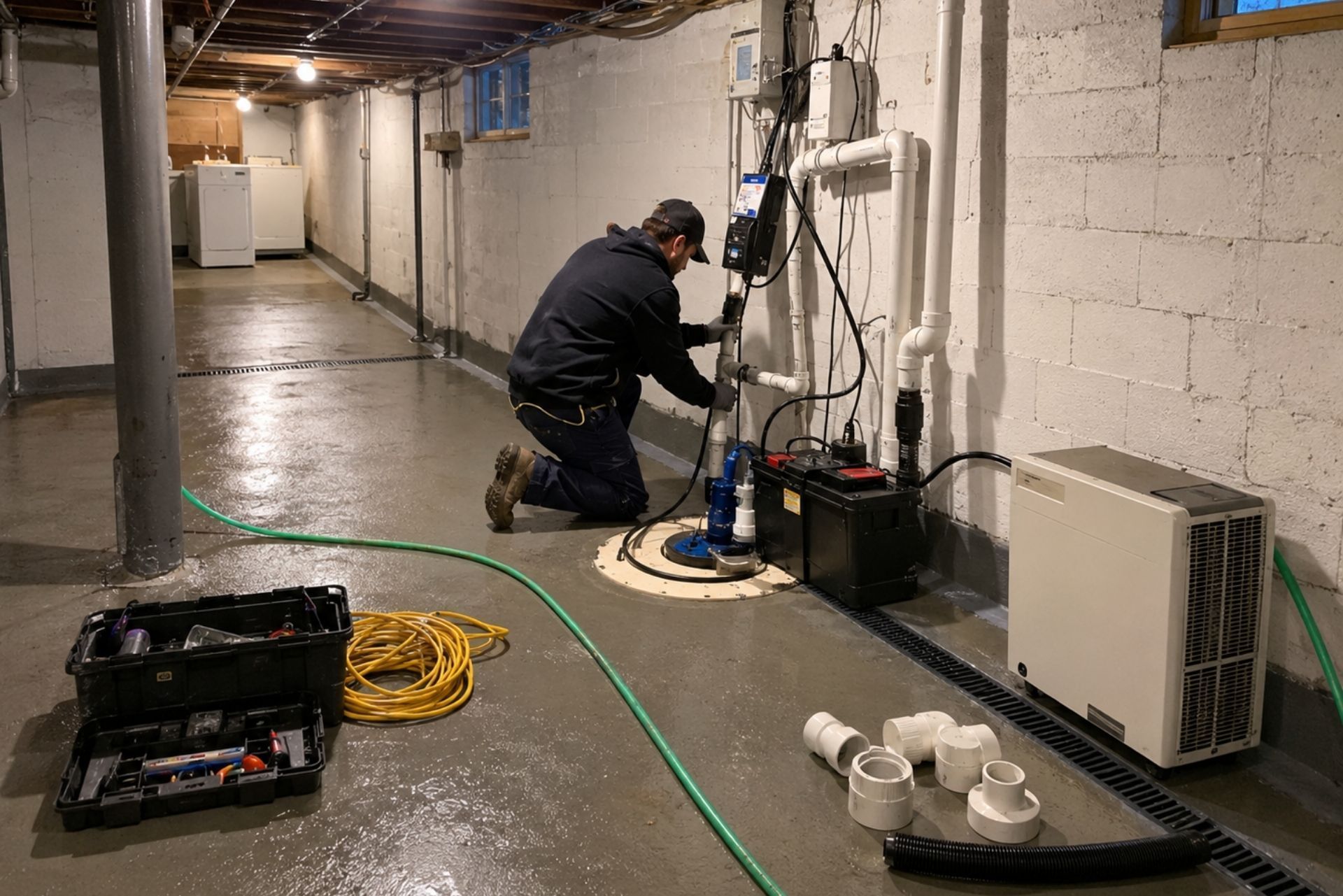
Waterproofing contractors rely on expensive, specialized equipment that travels from job site to job site. Standard commercial property policies typically cover items stored at a fixed business location, but they do not extend to equipment in transit or on a customer's property. This gap can be significant for a trade that depends on portable sump pumps, hydraulic injection systems, pipe cameras, and dehumidifiers.
Inland Marine Insurance for Sump Pumps and Tools
Inland marine insurance is the policy type that covers movable property and equipment in transit. Despite its nautical name, it has nothing to do with boats. For waterproofing contractors, an inland marine floater can cover sump pumps, battery backup systems, pipe inspection cameras, concrete cutting saws, and other specialized tools. Policies are typically written on a scheduled basis, meaning each high-value item is listed individually, or on a blanket basis that covers all tools up to a stated limit. Premiums are generally reasonable, often running between $500 and $1,500 per year depending on the total value of the equipment being insured.
Commercial Auto for Service Fleets
Most waterproofing companies operate at least one or two service vehicles, and many run fleets of vans or trucks equipped with mounted equipment. Personal auto insurance does not cover vehicles used for business purposes, and a gap in commercial auto coverage can expose the business to catastrophic liability if a crew member causes an accident while driving to a job site. Connecticut requires minimum auto liability limits of 25/50/20 (bodily injury per person/per accident and property damage), but most commercial insurers recommend carrying at least $1 million in combined single limit coverage. Contractors should also consider hired and non-owned auto coverage if employees ever use personal vehicles for work-related errands.
Common Questions About Waterproofing Insurance
Does my policy cover mold growth after a repair fails?
Most standard general liability policies exclude mold or impose very low sublimits, sometimes as little as $5,000. Specialized waterproofing policies can include mold liability endorsements with limits ranging from $25,000 to $100,000. Because mold is one of the most common secondary damages from a failed waterproofing job, this endorsement is worth the added premium.
How much does a basic CT contractor policy cost?
A general liability policy for a small waterproofing contractor in Connecticut typically costs between $2,500 and $6,000 per year. Adding workers' compensation, commercial auto, and inland marine coverage can bring the total annual insurance spend to $12,000 to $25,000 or more, depending on payroll size and fleet size. Contractors with clean claims histories and strong safety programs can often negotiate lower rates.
Is insurance required to get a CT HIC registration?
The HIC registration itself requires a $15,000 surety bond, and Connecticut's contractor registration requirements also mandate that employers carry workers' compensation insurance if they have any employees. General liability insurance is not technically required by the state for registration, but most general contractors and homeowners will refuse to hire a subcontractor who does not carry it. As a practical matter, operating without GL coverage is a serious business risk.
What happens if a crew member gets hurt on a residential job?
If the contractor carries workers' compensation insurance, the policy covers the injured worker's medical bills, rehabilitation costs, and a portion of lost wages. Without workers' comp, the contractor is personally liable for all costs and may face state penalties. The homeowner's own insurance will not cover a contractor's employee, so there is no fallback if the contractor is uninsured.
Do I need extra coverage for excavation work?
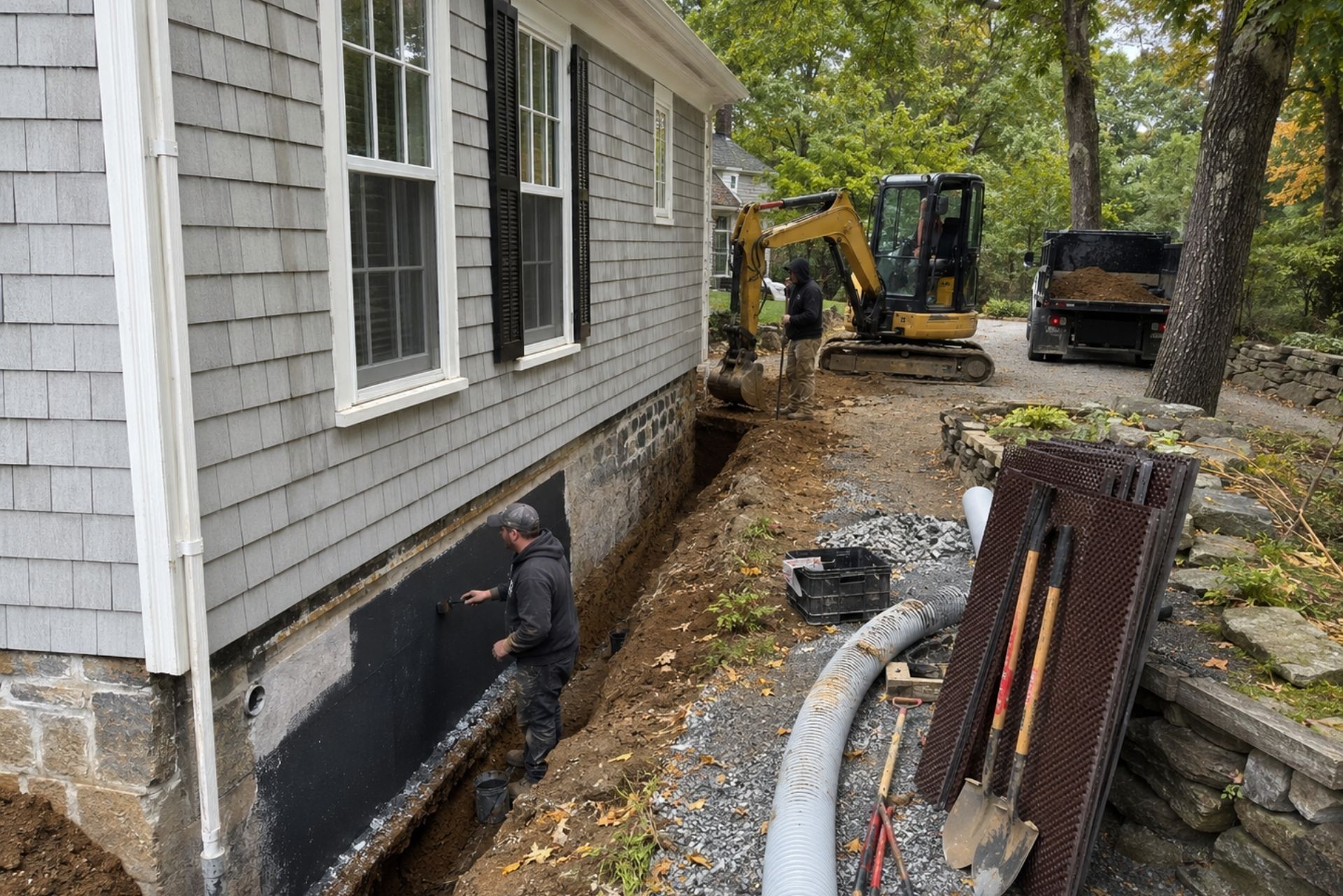
Yes. Exterior waterproofing often involves excavation around a home's foundation, which introduces risks of utility line strikes, soil collapse, and damage to neighboring properties. Some general liability policies exclude or limit excavation work, particularly for depths beyond a certain threshold. Contractors who regularly perform exterior drainage or foundation coating work should confirm that their policy includes excavation coverage and should carry adequate limits to cover potential damage to underground utilities.
Making the Right Choice for Your Business
Insurance for basement waterproofing contractors in Connecticut is not a one-size-fits-all purchase. The combination of below-grade work, water-related liability, mold exposure, and the state's strict HIC registration rules creates a risk profile that demands careful policy selection. Contractors who treat insurance as a checkbox exercise, buying the cheapest policy available, often find themselves unprotected when a real claim arrives.
The most effective approach is to work with an insurance broker who understands construction trades and, ideally, has experience with waterproofing-specific risks. A broker can help identify coverage gaps, negotiate competitive premiums, and ensure that the policy language actually covers the work being performed. As legislative activity around HIC reform continues in Connecticut, staying current with bonding and insurance requirements is equally important.
The right insurance program protects not just the business but also its employees, its customers, and its reputation. For a trade where a single failed repair can generate a five-figure claim, that protection is not optional.
About The Author:
Anton Reed
As Managing Principal of Adion Financial Group, I’m committed to helping individuals and businesses achieve financial security through strategic insurance and planning solutions. My focus is on building trust, delivering clarity, and ensuring every client receives expert guidance backed by experience and integrity.
Contact Us
Personal INSURANCE Coverage
Comprehensive Coverage for Every Personal Need
Business Insurance Solutions
Professional Liability Coverage for Service-Based Businesses
General Liability Insurance
Protects businesses from lawsuits related to injuries and property damage.
INDUSTRIES WE SERVE
Specialized Coverage for Leading Connecticut Industries
Contractors
Insurance
Whether you’re a general contractor or a specialized tradesperson, we offer coverage that protects against job site risks, equipment damage, and liability claims.

Commercial Truck Insurance
Whether you operate a single truck or an entire fleet, we provide coverage for cargo, liability, and physical damage to keep your business moving.

Restaurant Business Insurance
Keep your restaurant, café, or bar protected with coverage for property damage, liquor liability, foodborne illness, and employee injuries.

Commercial Real Estate Insurance
Safeguard your commercial properties, rental units, and office spaces from property damage, liability claims, and tenant-related risks.

“I’ve been with AFG for years. Their service is second to none, and I always feel confident that I’m covered.”
Sarah K.
Real Stories.
Real Protection.
Real Trust.
See Why Businesses and Families Trust Us for Coverage.

Quick Answers to Your Insurance Questions
Frequently Asked Questions
about Adion Financial Group
Understanding Insurance Starts with the Right Information
1. What types of insurance do you offer?
At Adion Financial Group, we offer a wide range of insurance options designed to meet the needs of both individuals and businesses. For individuals, we provide coverage for personal auto, home, renters, life, and health insurance. Whether you're looking to protect your home, your car, or your loved ones, we have a solution tailored to your needs.
2. How do I get a quote for insurance?
Getting an insurance quote with Adion Financial Group is simple and fast. First, visit our website and fill out the quote request form, providing some basic information about the type of insurance you need. If you prefer a more personal touch, you can also contact us directly, and one of our agents will walk you through the process.
3. What should I do if I need to file a claim?
If you need to file a claim, the first step is to notify us immediately. You can either call our office or submit your claim online, depending on your preference. Once we receive your claim, our team will guide you through the necessary steps and help you gather the required information.
4. How can I change my coverage or update my policy?
Making changes to your coverage or updating your policy is easy with Adion Financial Group. Whether you're moving to a new home, adding a vehicle, or expanding your business, we can help you adjust your insurance to reflect your current needs.
5. Why should I choose an independent insurance agency?
Choosing an independent insurance agency like Adion Financial Group provides you with a distinct advantage: we work for you, not an insurance company. Our independent status allows us to shop around with multiple carriers to find the most competitive rates and the best coverage options for your unique situation.
6. How can I make sure I have the right amount of coverage?
Determining the right amount of coverage can be overwhelming, but our team at Adion Financial Group is here to help. The first step is assessing your personal or business assets and identifying the potential risks you face. Whether you're an individual looking to protect your home and car, or a business owner trying to safeguard your employees and property, we will walk you through the different coverage options.
Stay Informed on Insurance Trends and Tips
Insights & Tips to Keep You Informed

Contact Us
Phone
Locations
Connecticut Location
703 Hebron Ave., 3rd Floor, Glastonbury, CT 06033
North Carolina Location
436 East 36th St., Charlotte, NC 28205