
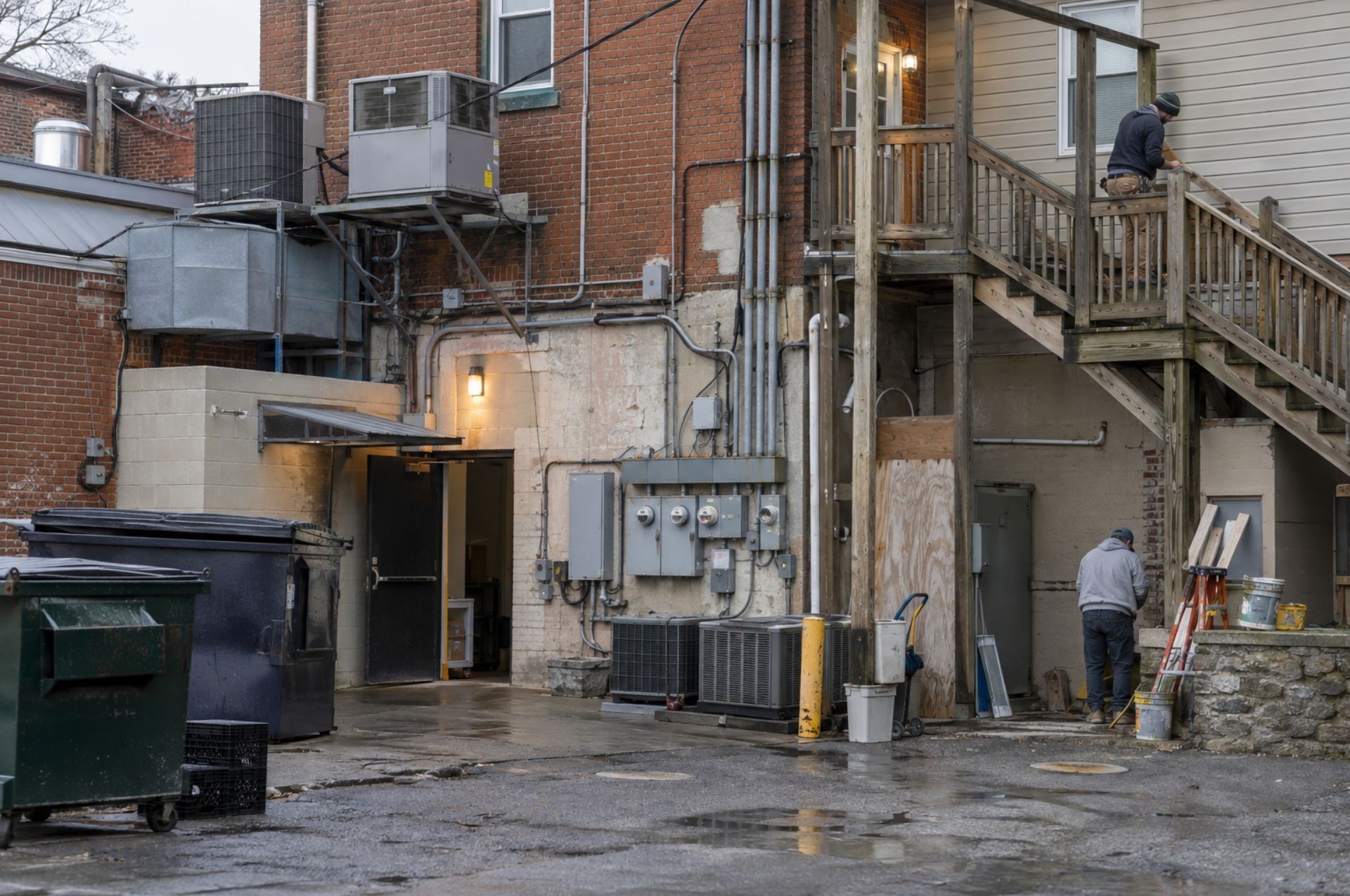
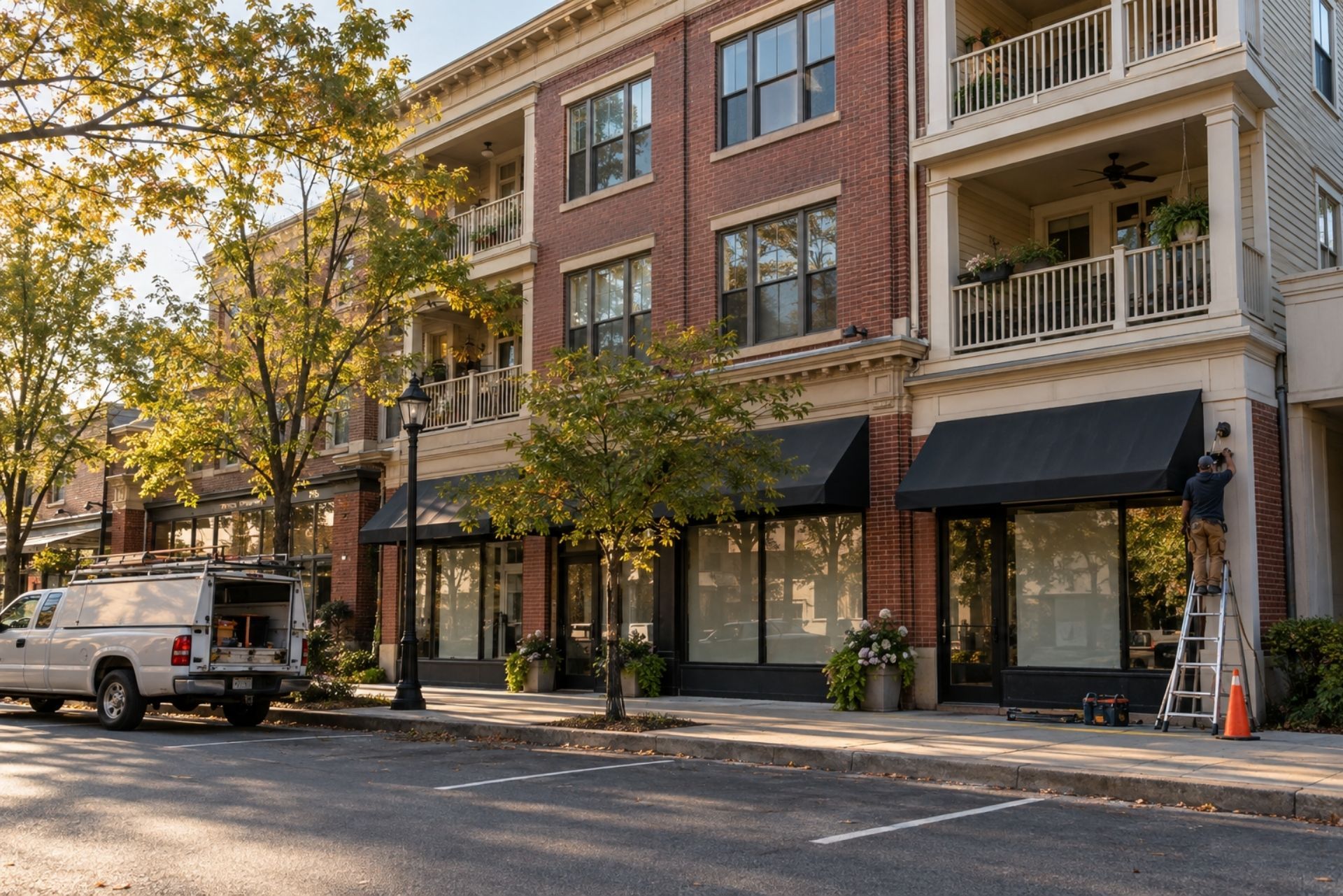
Owning a building that houses apartments upstairs and a coffee shop or boutique at street level creates a set of insurance challenges that purely residential or purely commercial properties simply do not face. A mixed-use property blends two distinct risk profiles under one roof, and standard policies designed for a single occupancy type will almost always leave gaps. For property owners juggling apartments, retail tenants, restaurants, property limits, liability exposures, and income protection, the right insurance program is not a single off-the-shelf policy but a carefully assembled package. The commercial property market has shown
modest rate increases of around 3.6 percent as of late 2025, and mixed-use buildings often land in a more complex underwriting category than that average suggests. Understanding how carriers evaluate these properties, what coverage components matter most, and where responsibility falls between landlord and tenant can mean the difference between a well-protected investment and a six-figure coverage gap after a single claim.
The Fundamentals of Mixed-Use Property Insurance
Mixed-use property insurance is not a single named product but rather a combination of coverages tailored to buildings that serve more than one purpose. Because these structures generate revenue from both residential leases and commercial rents, insurers must account for two separate bodies of regulation, two different liability exposures, and two distinct loss patterns. The foundation of any program for a mixed-use building rests on accurately classifying the property, selecting appropriate policy forms, and ensuring that neither the residential nor the commercial component is underinsured.
Defining Mixed-Use Properties for Insurance Carriers
Insurance carriers classify a mixed-use property as any structure where two or more occupancy types share a single building envelope. A three-story walkup with ground-floor retail and upper-floor apartments is the classic example, but the category also includes buildings with office space above a restaurant, or live-work lofts with studio tenants on the same floor as a nail salon. The ratio of commercial to residential square footage matters significantly to underwriters. As one industry observation puts it, a building that is 60 percent residential and 40 percent retail does not fit neatly into a landlord policy because it carries the exposures of both worlds. Carriers will typically require a commercial property policy form rather than a residential landlord form once the commercial component exceeds a certain threshold, which can vary by jurisdiction and lender requirements.
Why Standard Residential Policies Aren't Enough
A standard residential landlord policy is designed to cover apartment buildings where the primary risk is tenant-related: water damage, fire from cooking, slip-and-fall claims in hallways. It does not contemplate the foot traffic of a retail store, the grease fire risk of a restaurant kitchen, or the product liability exposure of a commercial tenant selling goods to the public. Placing a mixed-use building on a residential-only policy can result in a denied claim if the loss originates from or involves the commercial portion. Underwriters who discover an undisclosed commercial tenant during a claim investigation may void coverage entirely, leaving the owner responsible for the full cost of repairs, legal defense, and lost rent.

Core Coverage Components for Owners and Tenants
A properly structured insurance program for a mixed-use building addresses three broad categories of risk: physical damage to the structure, legal liability for injuries or property damage to third parties, and financial loss from interrupted rental income. Each of these categories requires its own policy or endorsement, and the limits must reflect the specific exposures present in the building.
Commercial General Liability vs. Property Coverage
Commercial general liability, often abbreviated CGL, protects the property owner against claims arising from bodily injury or property damage that occurs on the premises. If a customer slips on an icy sidewalk outside the retail space or a visitor is injured in a common stairwell, CGL responds. Property coverage, by contrast, pays to repair or replace the building itself and any building-owned contents after a covered peril such as fire, windstorm, or vandalism. These two coverages serve entirely different functions, and both are essential. A CGL policy will not pay to rebuild a fire-damaged wall, and a property policy will not cover a lawsuit filed by an injured pedestrian. Owners should carry CGL limits that satisfy contractual and landlord requirements, with higher umbrella limits for buildings in high-traffic urban locations.
Loss of Rental Income Protection
Mixed-use buildings generate revenue from both residential and commercial leases, and those two income streams behave differently after a loss. Residential rents tend to be relatively uniform and predictable, while commercial rents may include percentage-of-sales clauses, seasonal fluctuations, or triple-net structures. Owners face potential coverage gaps because residential and commercial rents are calculated differently, and a generic "loss of rents" endorsement may not capture the full financial impact of a vacancy caused by a covered loss. A restaurant paying eight thousand dollars per month in base rent plus a percentage of gross sales will generate a very different income loss calculation than a two-bedroom apartment renting for two thousand dollars. Owners should work with their broker to ensure the loss of income endorsement reflects both revenue streams and includes an adequate period of restoration.
Ordinance or Law Coverage for Older Buildings
Many mixed-use buildings occupy older structures in established commercial districts, and local building codes may have changed significantly since the original construction. If a fire damages 40 percent of a building, the municipality may require the owner to bring the entire structure up to current code, not just repair the damaged portion. Standard property policies do not cover the cost of upgrading undamaged portions of a building. Ordinance or law coverage fills this gap, and the
essential components include Coverage A for loss to the undamaged portion and Coverage B for demolition costs required by code enforcement. For a pre-war building with original plumbing and electrical systems, the cost of code-mandated upgrades can exceed the cost of repairing the actual fire damage. Owners of buildings constructed before 1980 should treat this endorsement as non-negotiable.
Comparison: Coverage for Landlords vs. Commercial Tenants
One of the most common sources of confusion in mixed-use buildings is determining where the landlord's insurance responsibility ends and the tenant's begins. The lease agreement is the governing document, but many leases contain vague or contradictory insurance provisions that only become problematic after a claim.
Comparison Table: Who Insures What?
| Coverage Area | Landlord's Responsibility | Tenant's Responsibility |
|---|---|---|
| Building structure (walls, roof, foundation) | Yes, under property policy | No |
| Tenant improvements and buildout | Sometimes, if lease specifies | Usually yes, under tenant's policy |
| Common area liability (hallways, lobbies, parking) | Yes, under CGL | No |
| Interior of leased commercial space | No | Yes, under commercial tenant policy |
| Tenant's inventory and equipment | No | Yes, under business personal property |
| Loss of rental income (landlord's lost rent) | Yes, under loss of rents endorsement | No |
| Loss of business income (tenant's lost revenue) | No | Yes, under business income coverage |
| Liquor liability (restaurant/bar tenant) | No, unless landlord serves alcohol | Yes, if tenant holds liquor license |
A well-drafted lease should require commercial tenants to carry their own CGL policy with the landlord named as an additional insured. This gives the landlord a secondary layer of protection if a claim originates within the tenant's space. Residential tenants should be required to carry renters insurance, which covers their personal property and provides personal liability coverage that can reduce the landlord's exposure to subrogation claims.
Evaluating Risk Factors in Multi-Purpose Buildings
Underwriters price mixed-use buildings based on the highest-risk occupancy in the structure. A building with apartments and a bookstore presents a very different risk profile than one with apartments and a restaurant with a deep fryer and a liquor license. Understanding how carriers evaluate these risks helps owners anticipate premium costs and identify coverage needs before a loss occurs.
High-Risk Commercial Tenants: Restaurants and Retail
Restaurants consistently rank among the highest-risk commercial tenants for property insurers. Cooking equipment, grease traps, gas lines, and late-night operating hours all increase the probability of fire. A single kitchen fire in a ground-floor restaurant can cause smoke damage to every apartment above it, displacing tenants and triggering multiple loss-of-rent claims simultaneously. Retail tenants present different but still elevated risks: higher foot traffic increases slip-and-fall frequency, and inventory storage can create fire load concerns. Properties with restaurant tenants may find that E&S carriers remain the primary source of coverage because standard admitted market insurers are reluctant to write buildings with significant cooking exposures. Owners should require restaurant tenants to maintain their own property and liability policies with adequate limits and to provide certificates of insurance annually.
Shared Risks: Fire Safety and Common Areas
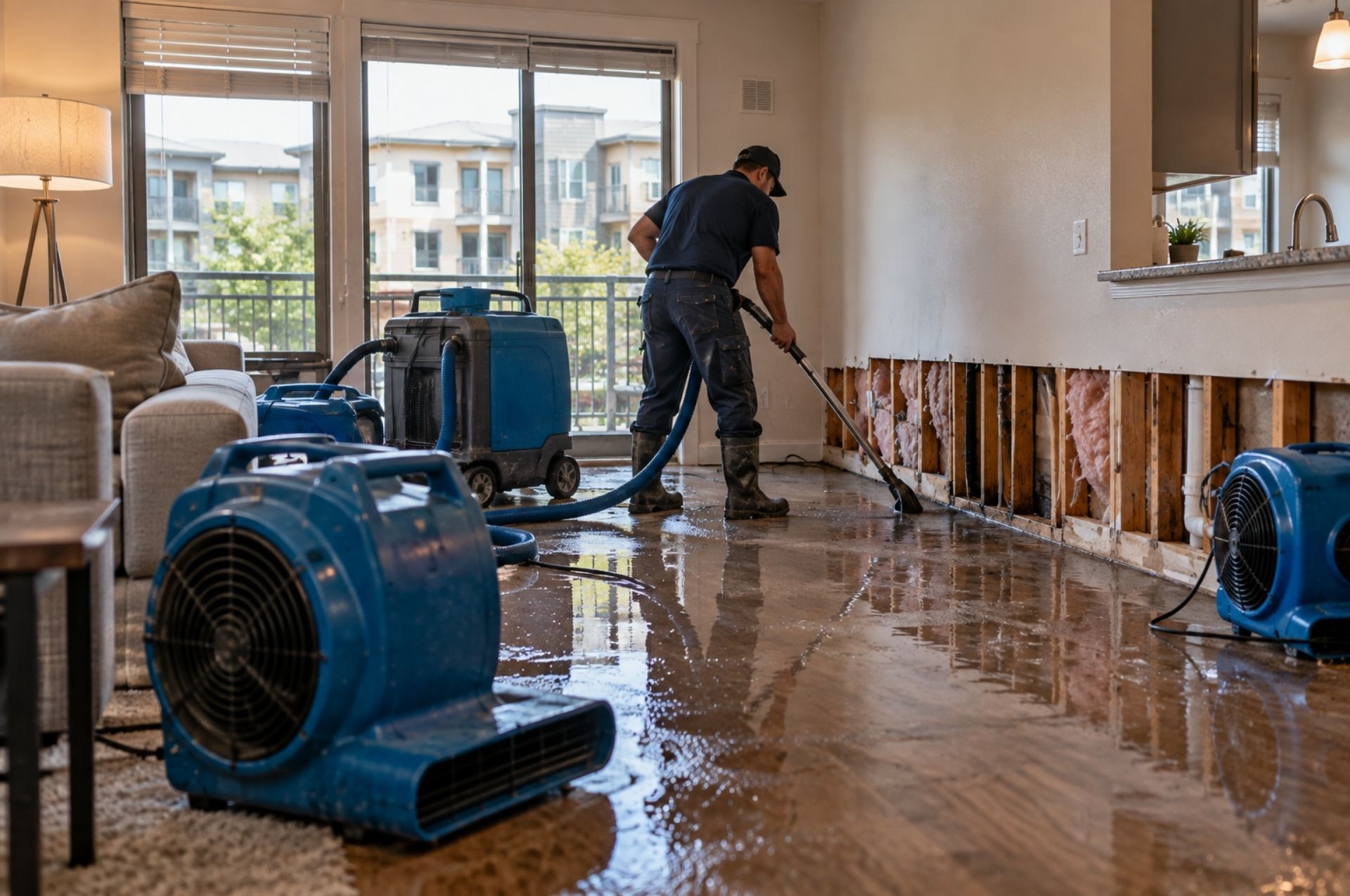
Mixed-use buildings present unique shared risks that neither a residential nor a commercial policy alone fully addresses. Fire suppression systems must often meet both residential and commercial code requirements, and a failure in one system can affect the entire building. Common areas such as lobbies, elevators, stairwells, and parking structures serve both residential and commercial occupants, creating overlapping liability exposures. A water pipe that bursts in a shared mechanical room can damage the restaurant's walk-in cooler on the ground floor and flood two apartments on the floor above. Owners should ensure their property policy includes adequate coverage for building systems, and the CGL policy should not contain exclusions for common areas. Regular inspections of fire suppression, sprinkler systems, and shared HVAC equipment reduce both risk and premium costs over time.
Common Questions About Mixed-Use Policies
Do I need a single policy or separate policies for the residential and commercial portions? Most carriers write a single commercial package policy that covers the entire building, with endorsements tailored to each occupancy type. Splitting coverage between two carriers creates coordination problems during claims and is generally not recommended.
Can my insurance be canceled if a tenant changes the use of their space? Yes. If a retail tenant converts to a restaurant or a tenant begins operating a business not disclosed to the insurer, the carrier may cancel or non-renew the policy. Lease agreements should require tenants to notify the landlord before changing their business operations.
Does my policy cover a tenant's customers who are injured in the building? The landlord's CGL policy covers injuries in common areas and areas under the landlord's control. Injuries occurring inside a tenant's leased space are typically the tenant's responsibility, which is why requiring tenants to carry their own liability coverage is critical.
What happens if my building is in a state with aggressive litigation trends? Social inflation, the tendency for jury awards to increase over time, affects mixed-use properties significantly because they combine residential and commercial liability exposures. North Carolina became the first state to prohibit third-party litigation funding in July 2026, a move aimed at curbing inflated claim costs, but most states have not followed suit. Owners in litigation-heavy jurisdictions should carry higher umbrella limits.
Is flood insurance included in a standard mixed-use property policy? No. Flood coverage must be purchased separately, either through the National Flood Insurance Program or a private flood insurer. Ground-floor commercial tenants in flood-prone areas face particular risk because inventory and equipment losses are not covered under the building owner's flood policy.
Making the Right Choice for Your Investment
Insuring a mixed-use property requires more than selecting a policy from a menu. It demands an honest assessment of the building's occupancy mix, the risk profile of each tenant, and the financial exposure created by both residential and commercial income streams. Owners who treat insurance as a one-time purchase rather than an ongoing management responsibility often discover gaps only after a claim has been filed and denied.
The most effective approach is to work with a broker who specializes in commercial real estate and has experience placing coverage for buildings with mixed occupancies. That broker should review every commercial lease for insurance requirements, verify tenant certificates of insurance at least annually, and reassess coverage limits whenever a new tenant moves in or an existing tenant changes operations. Property limits, liability, and income protection all need to reflect the building as it actually operates today, not as it was configured when the policy was first written. A mixed-use building is a complex asset, and protecting it well means assembling a coverage program that accounts for every layer of risk under its roof.
About The Author:
Anton Reed
As Managing Principal of Adion Financial Group, I’m committed to helping individuals and businesses achieve financial security through strategic insurance and planning solutions. My focus is on building trust, delivering clarity, and ensuring every client receives expert guidance backed by experience and integrity.
Contact Us
Personal INSURANCE Coverage
Comprehensive Coverage for Every Personal Need
Business Insurance Solutions
Professional Liability Coverage for Service-Based Businesses
General Liability Insurance
Protects businesses from lawsuits related to injuries and property damage.
INDUSTRIES WE SERVE
Specialized Coverage for Leading Connecticut Industries
Contractors
Insurance
Whether you’re a general contractor or a specialized tradesperson, we offer coverage that protects against job site risks, equipment damage, and liability claims.

Commercial Truck Insurance
Whether you operate a single truck or an entire fleet, we provide coverage for cargo, liability, and physical damage to keep your business moving.

Restaurant Business Insurance
Keep your restaurant, café, or bar protected with coverage for property damage, liquor liability, foodborne illness, and employee injuries.

Commercial Real Estate Insurance
Safeguard your commercial properties, rental units, and office spaces from property damage, liability claims, and tenant-related risks.

“I’ve been with AFG for years. Their service is second to none, and I always feel confident that I’m covered.”
Sarah K.
Real Stories.
Real Protection.
Real Trust.
See Why Businesses and Families Trust Us for Coverage.

Quick Answers to Your Insurance Questions
Frequently Asked Questions
about Adion Financial Group
Understanding Insurance Starts with the Right Information
1. What types of insurance do you offer?
At Adion Financial Group, we offer a wide range of insurance options designed to meet the needs of both individuals and businesses. For individuals, we provide coverage for personal auto, home, renters, life, and health insurance. Whether you're looking to protect your home, your car, or your loved ones, we have a solution tailored to your needs.
2. How do I get a quote for insurance?
Getting an insurance quote with Adion Financial Group is simple and fast. First, visit our website and fill out the quote request form, providing some basic information about the type of insurance you need. If you prefer a more personal touch, you can also contact us directly, and one of our agents will walk you through the process.
3. What should I do if I need to file a claim?
If you need to file a claim, the first step is to notify us immediately. You can either call our office or submit your claim online, depending on your preference. Once we receive your claim, our team will guide you through the necessary steps and help you gather the required information.
4. How can I change my coverage or update my policy?
Making changes to your coverage or updating your policy is easy with Adion Financial Group. Whether you're moving to a new home, adding a vehicle, or expanding your business, we can help you adjust your insurance to reflect your current needs.
5. Why should I choose an independent insurance agency?
Choosing an independent insurance agency like Adion Financial Group provides you with a distinct advantage: we work for you, not an insurance company. Our independent status allows us to shop around with multiple carriers to find the most competitive rates and the best coverage options for your unique situation.
6. How can I make sure I have the right amount of coverage?
Determining the right amount of coverage can be overwhelming, but our team at Adion Financial Group is here to help. The first step is assessing your personal or business assets and identifying the potential risks you face. Whether you're an individual looking to protect your home and car, or a business owner trying to safeguard your employees and property, we will walk you through the different coverage options.
Stay Informed on Insurance Trends and Tips
Insights & Tips to Keep You Informed


Contact Us
Phone
Locations
Connecticut Location
703 Hebron Ave., 3rd Floor, Glastonbury, CT 06033
North Carolina Location
436 East 36th St., Charlotte, NC 28205