Does Insurance Cover Crumbling Foundations in CT?
See How We're Different
or call us: (888) 585-5188
26 May 2026
Thousands of Connecticut homeowners have discovered hairline cracks in their basement walls that signal something far worse than cosmetic damage: a slow chemical reaction eating away at the very concrete holding up their homes. The question of crumbling foundations and Connecticut home insurance, specifically what is covered, has become one of the most pressing property concerns in the northeastern United States. Foundation replacement costs routinely exceed $150,000 to $350,000, and the answer from most standard insurance carriers has been a frustrating denial. Understanding the intersection of geological science, insurance contract language, and state-funded relief programs is essential for any homeowner in the affected regions. This guide breaks down the coverage landscape, legislative protections, and financial alternatives available in 2026.
The Pyrrhotite Crisis and Homeowners Insurance in Connecticut
The crumbling foundation crisis in Connecticut is not a case of poor construction or builder negligence in the traditional sense. It stems from a specific mineral contamination in aggregate stone that was quarried from a single source over several decades. The scale of the problem, estimated to affect between 35,000 and 50,000 homes, has created a unique insurance challenge that existing policy frameworks were never designed to address.
The Science of Crumbling Concrete Foundations
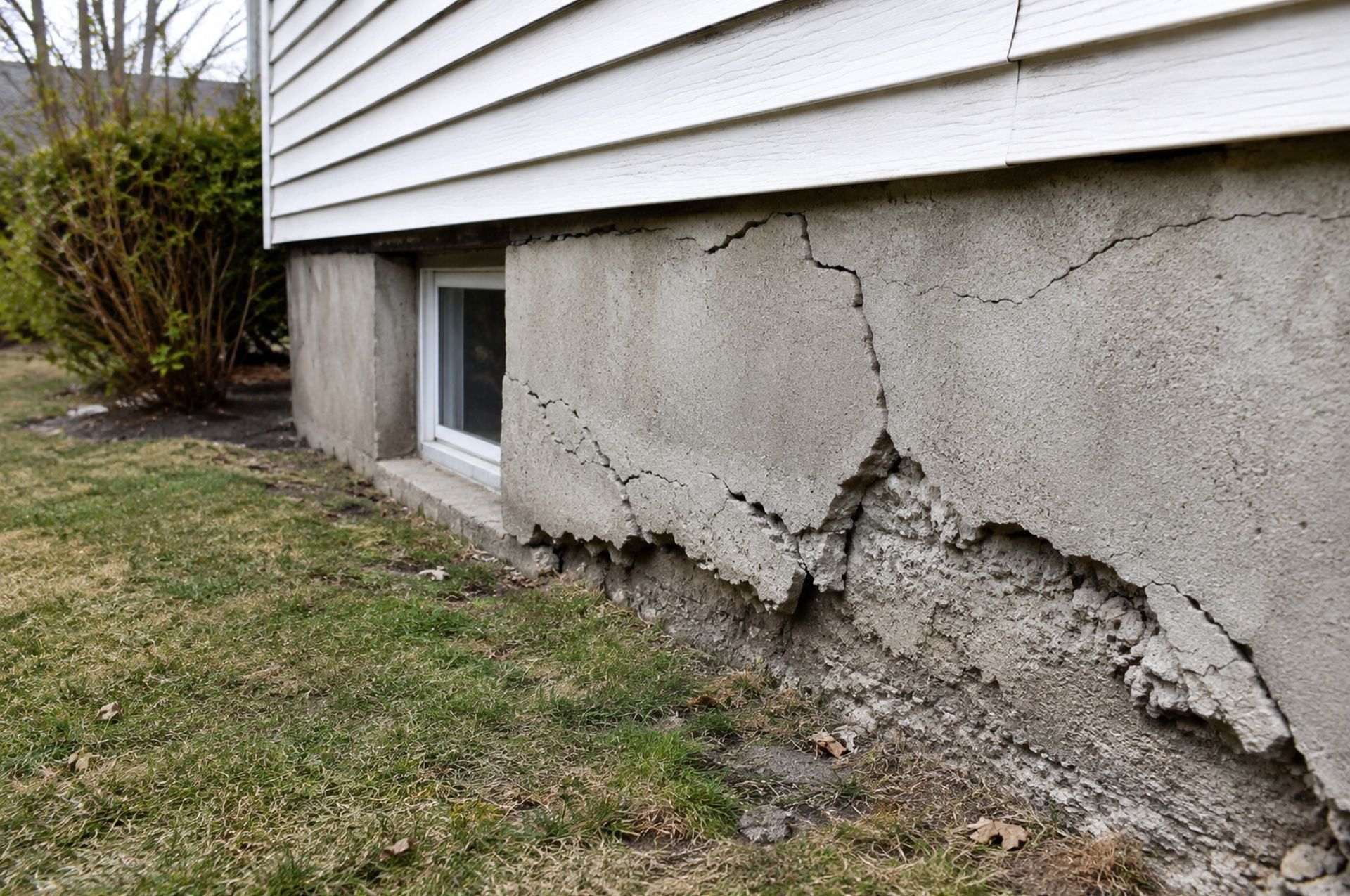
The culprit is pyrrhotite, an iron sulfide mineral that was present in aggregate stone quarried primarily from the Becker's Quarry in Willington, Connecticut. When pyrrhotite is exposed to oxygen and moisture over time, it undergoes an oxidation reaction that produces expansive compounds within the concrete. This expansion creates a distinctive map-cracking pattern on foundation walls, eventually causing the concrete to lose its structural integrity entirely.
The reaction is slow, often taking 10 to 30 years before visible damage appears. Homes built between the 1980s and early 2000s using concrete from affected suppliers are at the highest risk. A visual inspection for map cracking and white deposits on basement walls is typically the first indicator, though professional core testing is required for confirmation.
Geographic Hotspots and Affected Townships
The geographic concentration of affected homes follows the distribution network of the contaminated aggregate. The hardest-hit communities include Vernon, Tolland, Stafford, Ellington, Willington, and several other towns in Hartford and Tolland counties. Some homes in Windham County have also tested positive for pyrrhotite contamination.
Property values in these townships have dropped significantly, with some homeowners reporting 50% or greater declines in assessed value. The regional nature of the crisis means that entire neighborhoods share the same risk profile, creating a compounding effect on local real estate markets and municipal tax bases.
Standard Homeowners Policy Coverage Limits
Most Connecticut homeowners who have filed claims related to crumbling foundations have received denials from their insurance carriers. The standard HO-3 homeowners policy, which is the most common form in the state, provides broad coverage for the dwelling but contains specific language that insurers have used to exclude foundation deterioration claims.
The Definition of 'Collapse' in Insurance Contracts
Insurance policies typically cover "collapse" as a covered peril, but the contractual definition of collapse is far narrower than most homeowners expect. Many carriers define collapse as a sudden, complete falling down of a structure or a substantial impairment of structural integrity. A foundation that is slowly deteriorating over decades does not meet this threshold in most insurers' interpretation.
| Coverage Element | Standard HO-3 Policy | What Crumbling Foundation Homeowners Need |
|---|---|---|
| Collapse Coverage | Sudden, complete structural failure | Gradual deterioration over 10-30 years |
| Covered Perils | Fire, wind, hail, theft, etc. | Chemical reaction in building materials |
| Foundation Repair | Limited to covered peril damage | Full replacement ($150K-$350K) |
| Exclusion Type | Wear and tear, settling, cracking | Pyrrhotite-related degradation |
Common Exclusion Clauses for Foundation Issues
Standard policies contain exclusions for "wear and tear," "settling, cracking, shrinking," and "defective materials." Insurers have relied heavily on these provisions to deny crumbling foundation claims. The argument is that pyrrhotite contamination constitutes a latent defect in building materials, which falls squarely within the defective materials exclusion.
Some policies also exclude damage caused by "earth movement" or "ground settling," which insurers have occasionally applied to foundation cases even though the damage mechanism is chemical rather than geophysical. Homeowners who purchased their policies after 2016 may also find specific pyrrhotite or crumbling foundation exclusions written into their contracts, as carriers updated their forms in response to the crisis.
The Role of the Connecticut Foundation Solutions Reinsurance Company (CFSRC)
Recognizing that private insurance was not going to cover the crisis, the Connecticut General Assembly created a state-backed financial assistance program. The Connecticut Foundation Solutions Indemnity Company, often referenced alongside the CFSRC reinsurance structure, serves as a captive insurance mechanism funded through a surcharge on Connecticut homeowners insurance policies.
Eligibility Requirements for Captive Insurance Funding
To qualify for assistance through the state program, homeowners must meet several criteria. The property must be a residential dwelling located in Connecticut, and the foundation must test positive for pyrrhotite through an approved testing protocol. The home must have been the applicant's primary residence, and the applicant must demonstrate financial need or hardship related to the foundation replacement costs.
As of early 2026, the program reached a major milestone by countersigning its 1,500th Participation Agreement, returning critical financial support to affected families. The program caps its contribution, and homeowners are typically responsible for a portion of the replacement cost. Income-based tiers determine the exact level of assistance, with lower-income homeowners receiving a higher percentage of coverage.
Application Process for Foundation Replacement Grants
The application process begins with a professional core sample test of the foundation, which must be conducted by a qualified engineer. Once pyrrhotite contamination is confirmed, homeowners submit their application to the CFSIC along with documentation including proof of ownership, tax returns, and contractor estimates for foundation replacement.
Processing times have varied throughout the program's history, with wait times stretching to several years during peak demand periods. Homeowners should expect to provide ongoing documentation and may need to select from a list of approved contractors. The program does not cover cosmetic repairs or partial fixes; it is designed specifically for full foundation replacement when the structural damage meets program thresholds.
Legal Precedents and Legislative Protections for CT Homeowners
Connecticut's legislature and courts have been actively shaping the legal framework around crumbling foundations for over a decade. Several significant legal developments have clarified the rights of affected homeowners and the obligations of insurers.
Significant Court Rulings on Foundation Claims
Court cases in Connecticut have produced mixed results for homeowners. Some early rulings found that insurers were within their rights to deny claims under defective materials exclusions. Other cases, particularly those involving the definition of "collapse," have been more favorable to policyholders who could demonstrate substantial structural impairment.
The Connecticut Supreme Court has addressed the collapse definition in several contexts, and the
legal interpretation of what constitutes structural impairment continues to evolve. Homeowners considering litigation should consult with attorneys who specialize in insurance coverage disputes, as the outcome often depends on the specific policy language and the extent of documented damage.
Mandatory Insurance Disclosures and Surcharges
Public Act 19-117 and subsequent legislation established the $12 annual surcharge on Connecticut homeowners insurance policies that funds the CFSIC program. This surcharge applies to all residential property insurance policies in the state, regardless of whether the insured property is in an affected area. The legislature also mandated that real estate sellers disclose known foundation issues, and that insurers provide clear information about pyrrhotite-related exclusions in their policies.
These legislative protections represent a recognition that crumbling foundations and Connecticut home insurance coverage gaps required a public policy response beyond what the private market could provide.
Alternative Financial Relief and Tax Abatement Options
Beyond the CFSIC program, several financial relief mechanisms exist for homeowners dealing with foundation damage. These options can help offset costs while waiting for program assistance or supplement the state-funded contribution.
Property Tax Reassessments for Diminished Value
Connecticut law allows homeowners with confirmed pyrrhotite damage to apply for property tax reassessments that reflect the diminished value of their homes. Municipalities in affected areas have established procedures for reassessing properties with documented foundation problems, often resulting in significant reductions in assessed value and corresponding tax savings.
The reassessment process typically requires submission of the same core test results used for the CFSIC application. Some towns have proactively adjusted assessments for entire neighborhoods where contamination is widespread, though homeowners should verify their individual assessment reflects the damage to their specific property.
Federal Tax Deductions for Casualty Losses
Homeowners who have incurred unreimbursed costs for foundation replacement may qualify for federal casualty loss deductions under certain conditions. The Tax Cuts and Jobs Act of 2017 limited casualty loss deductions to federally declared disaster areas, but Connecticut's crumbling foundation crisis received a specific federal disaster declaration that may apply to qualifying homeowners.
Tax treatment of foundation replacement costs is complex, and homeowners should work with a certified public accountant familiar with both the federal casualty loss provisions and Connecticut's own tax relief measures. State-level tax credits and abatements may also be available depending on the municipality.
Steps to Take if You Suspect a Crumbling Foundation
Homeowners who notice map cracking, white mineral deposits, or crumbling concrete in their basement walls should act promptly. The following steps provide a clear path forward:
- Document the visible damage with dated photographs and written descriptions of all affected areas.
- Contact a licensed structural engineer to conduct a professional visual assessment of the foundation.
- If the engineer recommends it, arrange for a core sample test through an approved testing laboratory to confirm the presence of pyrrhotite.
- File a claim with the homeowners insurance carrier, even if denial is expected, to preserve the right to appeal or litigate.
- Submit an application to the CFSIC program with all required documentation, including test results and financial records.
- Consult with a real estate attorney experienced in Connecticut foundation cases to understand all available legal options.
- Contact the local tax assessor's office to initiate a property tax reassessment based on the confirmed damage.
Early action matters. The chemical reaction does not stop on its own, and delays in testing and application can extend an already lengthy timeline for receiving financial assistance.
Frequently Asked Questions
Does my regular homeowners insurance cover a crumbling foundation in Connecticut? In most cases, no. Standard HO-3 policies exclude damage from defective materials, wear and tear, and settling, all of which insurers cite when denying pyrrhotite-related claims.
How much does it cost to replace a crumbling foundation? Full foundation replacement typically costs between $150,000 and $350,000, depending on the size of the home and site conditions. The process involves lifting the entire structure, demolishing the old foundation, and pouring a new one.
How long does the CFSIC application process take? Processing times vary, but homeowners should anticipate a wait of one to three years from initial application to the start of construction. Demand has consistently exceeded the program's capacity.
Can I sell a home with a crumbling foundation? Yes, but Connecticut law requires full disclosure of known foundation issues. Properties with confirmed pyrrhotite damage typically sell at steep discounts, often 40% to 60% below comparable homes with sound foundations.
Is the $12 insurance surcharge permanent? The surcharge was established by legislation and remains in effect as of 2026. Its continuation depends on the ongoing funding needs of the CFSIC program and future legislative action.
Making the Right Decision for Your Home
The reality for Connecticut homeowners facing crumbling foundations is that standard insurance policies will not cover the cost of repair or replacement. The gap between what private carriers will pay and what homeowners need has been partially filled by the CFSIC program, but significant financial burdens remain for affected families. Understanding the specific exclusions in a homeowners policy, the eligibility requirements for state assistance, and the available tax relief options creates the clearest path toward managing this crisis. Homeowners in affected regions should not wait for visible damage to worsen before seeking professional testing and exploring every available avenue for financial support. Acting early, documenting thoroughly, and consulting with qualified professionals in engineering, insurance law, and tax planning will produce the best possible outcome in a situation where no single solution covers the full cost.
Recent posts